
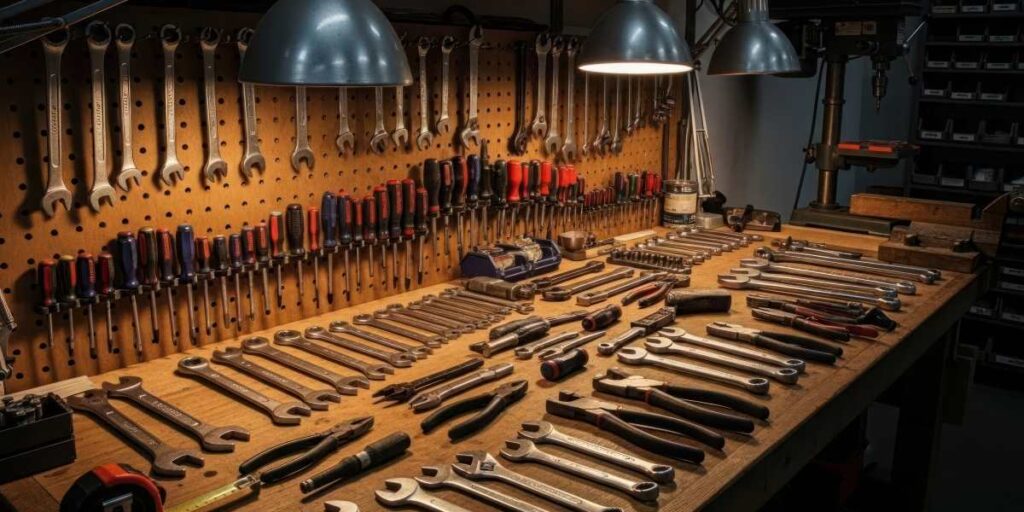
The core toolkit that you actually need often ends up being smaller than tool catalogs suggest. In many cases, ten well-chosen hand tools can cover the maintenance schedule of nearly any vehicle: oil, filters, brakes, plugs, batteries, and the steady stream of small repairs that would otherwise mean shop visits. Here’s the ten, with some tips on what to look for in each.
1. A 3/8-Inch Drive Socket Set
A metric set from 8mm to 19mm with a decent ratchet handles the majority of fasteners on any modern vehicle, and adding SAE sizes matters mainly for older American iron. Six-point sockets grip better than twelve-point and are the right default. Deep sockets, a few extensions, and a universal joint round out the set, and this is the purchase where quality pays for itself every single day.
2. Combination Wrenches
For every fastener a socket can’t reach: fittings, brackets, anything with a bolt on both sides. A metric set from 8mm to 19mm mirrors the sockets. Ratcheting combination wrenches are a meaningful upgrade in tight engine bays, provided the box end still fits the access you have.
3. A Torque Wrench
The tool that separates assembly from guesswork. Lug nuts, caliper bolts, drain plugs, and everything on an engine carry factory torque specifications, and modern vehicles have tightened the tolerances, with many European manufacturers specifying torque-plus-angle procedures on critical fasteners. The specs themselves come from the factory documentation for your exact car, and model-specific sources usually list them fastener by fastener, which is the difference between torqued and tight. A 3/8-inch click-type wrench is the starting point, stored wound down to preserve calibration.
4. Screwdrivers, Plural
A set of flat and Phillips drivers in several sizes, with hardened tips that don’t cam out. Worth adding if you touch Japanese vehicles or motorcycles: JIS-pattern drivers, which fit fasteners that Phillips drivers chew up. Stubby drivers earn their keep in engine bays more often than expected.
5. Pliers, In Their Varieties
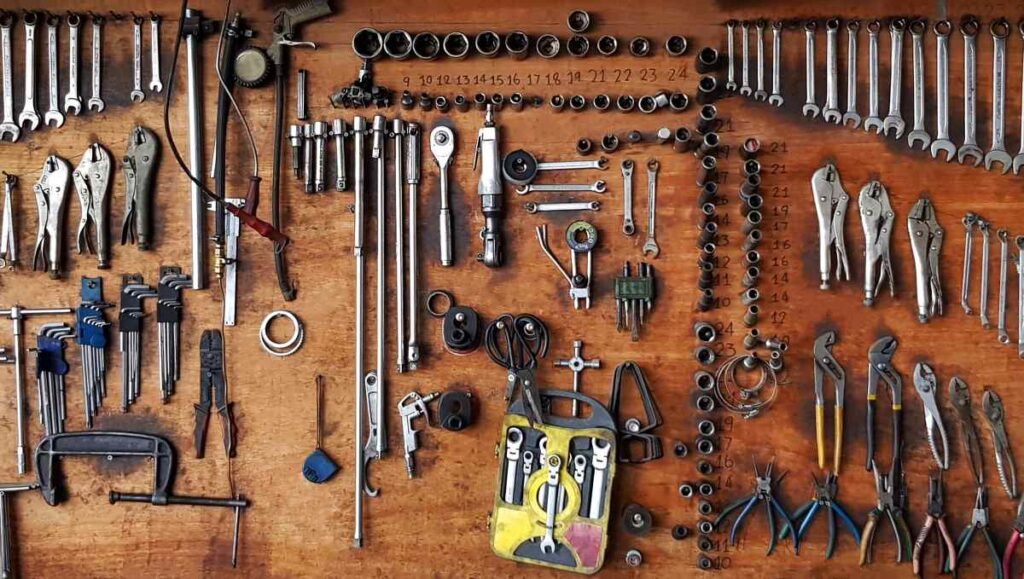
Needle-nose for reaching, slip-joint for holding, locking pliers for the fastener that has given up its flats, and diagonal cutters for zip ties and cotter pins. Hose clamp pliers join the family the first time a spring clamp in a deep engine bay wins an argument with ordinary pliers.
6. A Breaker Bar
Half-inch drive, 18 to 24 inches, for the fasteners that laugh at ratchets: lug nuts from tire shops, crank bolts, suspension hardware, and anything installed with corrosion as a thread locker. A breaker bar supplies controlled leverage and protects your ratchet’s mechanism from the abuse it wasn’t built for.
7. A Floor Jack And Jack Stands
We listed these together because they only ever work together. A 3-ton floor jack lifts the vehicle, and jack stands hold it, every time, without exception, since hydraulics fail and a vehicle on a jack alone is a vehicle held up by a seal. Add wheel chocks and learn the factory lift points from the manual, because sills and floor pans crumple where jacking points don’t.
8. A Spark Plug Socket With Extensions
Plug service is a defining home-mechanic job, and it has its own hardware: a plug socket in the correct size (commonly 5/8-inch or 16mm) with an internal magnet or rubber insert to lower plugs into deep wells, plus long extensions and often a wobble adapter to follow the plug tube’s angle. The full list of tools for spark plug replacement stays modest, and against typical shop pricing for the job, this socket may show the fastest payback of any tool here.
9. Pry Bars And A Dead Blow Hammer
For the mechanical persuasion portion of repair work: separating ball joints, popping trim, holding tension, and encouraging seized parts without marring them. A dead blow hammer delivers force without bounce, and the pair together replace the screwdriver-as-prybar habit that eventually costs a knuckle or a windshield.
10. A Multimeter And Test Light
Electrical problems are half of modern vehicle trouble, and these two answer the basic questions: is there voltage here, does this circuit have continuity, is this battery actually charged. Neither requires electronics expertise to use at the level that finds blown fuses, bad grounds, and dead sensors, and together they cost less than one hour of diagnostic labor at current shop rates.
The Eleventh Item That Makes Everything Easier: An emanuals Membership
Whether you need BMW service manuals online or engine service manuals, we at emanuals have got you covered. With an emanuals membership, you’re adding the information layer to your toolbox: over 5 million OEM manuals with the torque values, gaps, and procedures for every vehicle you’ll ever own, downloadable to keep. Sign up here and make it the eleventh item in the box.
FAQs
What’s the difference between 6-point and 12-point sockets?
Six-point sockets grip the flats of a fastener across more surface area and resist rounding, while twelve-point sockets engage in twice as many positions, which helps in tight access. Six-point is the right default, with twelve-point kept for the fasteners that need the extra positions.
Do I really need jack stands if I have a floor jack?
Yes, every single time the vehicle leaves the ground. A floor jack is a lifting device held up by a hydraulic seal, and seals fail without warning. Stands rated for the load, placed at the factory lift points, are what the vehicle rests on while you work near it.
What size spark plug socket do I need?
Most modern plugs take a 5/8-inch (16mm) socket, with 13/16-inch common on older vehicles and some odd sizes in between, so check the specification for your engine. Whatever the size, choose a socket with a magnet or rubber insert that holds the plug during removal from deep plug wells.
What are JIS screwdrivers and do I need them?
JIS is the Japanese fastener standard whose cross-head screws look like Phillips but differ subtly in geometry. A Phillips driver cams out of JIS screws and chews the heads, so if you work on Japanese motorcycles, ATVs, or older vehicles, a small JIS set earns its place.
How do I keep a torque wrench accurate?
Store click-type wrenches wound down to their lowest setting, never use one as a breaker bar, and don’t run fasteners past the click. With that treatment they hold calibration for years, and a periodic calibration check keeps heavy users honest.