
A garage capable of most vehicle repairs is a more modest project than it sounds. The jobs that make up the bulk of vehicle ownership – meaning fluids, brakes, suspension, tires, batteries, tune-ups, and diagnostics – typically require space, light, lifting equipment, a core toolset, and good information. And despite what some might lead you to believe, none of those items requires a commercial building or a five-figure budget.
Space And Layout
Let’s start with the space itself. A single car bay with three feet of clearance on each side and room to pass at front and rear will handle most repairs, though a two-car space makes everything more pleasant. Layout matters more than square footage though: keep one wall for the workbench and storage, keep the floor around the vehicle clear, and resist storing household overflow in the working zone, since a garage that must be excavated before every job sees fewer jobs. A sealed or epoxy-coated floor pays off quickly, being easier to clean, brighter, and kinder to you after hours on a creeper.
Lifting The Vehicle Safely
Nothing shapes a garage’s capability like its lifting setup, and nothing in the garage matters more to get right.
- The foundation tier is a 3-ton floor jack, four rated jack stands, wheel chocks, and ramps for jobs that only need access underneath a supported car. A vehicle goes on stands every time it goes in the air, with the stands placed at the factory lift points shown in the service manual.
- The upgrade tier is a mid-rise or two-post lift, which has fallen into hobbyist price territory at roughly $2,000 to $4,000 plus installation. A lift needs ceiling height (about 11 to 12 feet for a two-post), a suitable concrete slab, and honest assessment of how much work you do, but for brake, suspension, and exhaust work it transforms the experience.
Power, Air, And Light
Repairs consume outlets, so add circuits and place receptacles every few feet along the work wall, with at least one 240V circuit if a compressor, welder, or lift is in the future. Lighting is the cheapest capability upgrade available: bright overhead LED shop lights, plus portable and underhood lights, since the difference between adequate and excellent light shows up directly in work quality. A 20 to 30 gallon compressor unlocks impact tools, blow guns, and tire work, and plumbing a single air line with two drops covers a one-bay shop completely.
The Workbench Wall
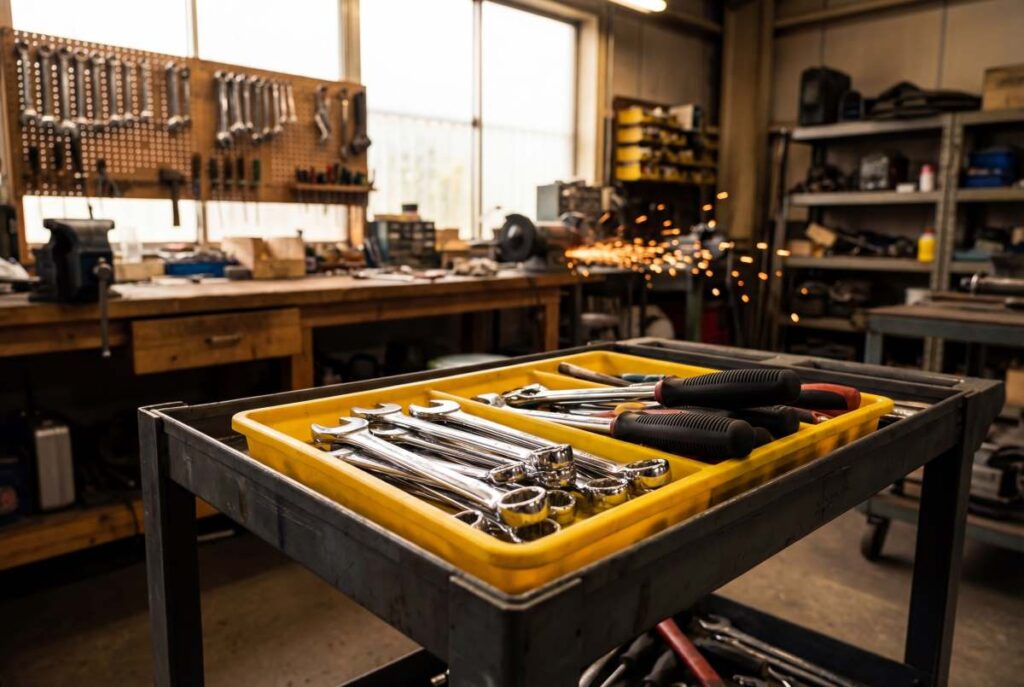
A sturdy bench with a vise bolted to it handles the off-vehicle half of repair work: pressing bushings, cleaning parts, rebuilding assemblies. Around it, storage should favor visibility, with a rolling tool chest for hand tools, wall or pegboard storage for frequently used items, and labeled bins for the hardware and consumables that otherwise form drifts. A parts-washing station, even a simple bin and brush setup, keeps solvent mess in one place.
The Core Toolset
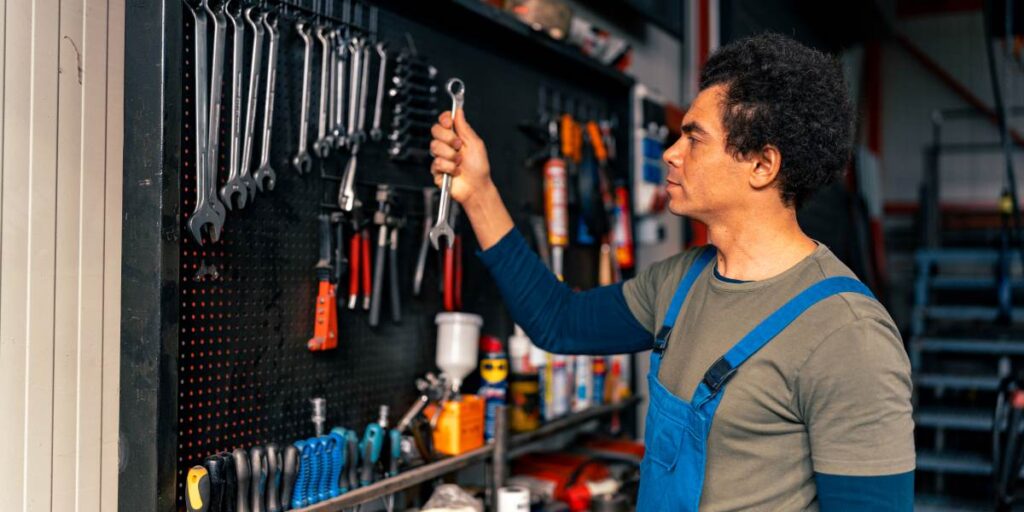
The tool collection that covers most repairs is well defined: a 3/8 and 1/2-inch socket set, combination wrenches, screwdrivers, pliers, a breaker bar, a torque wrench, a multimeter, and an OBD-II scanner, expanding into specialty tools as specific jobs demand them. Buying against the requirements of each job as it arrives builds exactly the collection your vehicles need and no more.
Safety Concerns
To keep things safe, you should have a fire extinguisher rated for fuel and electrical fires, mounted and visible. Add to that, ventilation for exhaust and solvent fumes, with the door open whenever an engine runs. Eye protection within reach of the bench is also helpful, as are gloves for chemical work. And finally, a first aid kit – just in case. None of it costs much, and all of it belongs in place before the first job.
DIY Made Simple With emanuals
Whether you’re needing a specific machine repair guide or OEM Toyota repair manuals, an emanuals membership stocks your reference shelf from day one, with factory documentation for the vehicles you own now and the ones you’ll own later. Downloadable straight to the bench computer, join here and build the rest of your garage around it.
FAQs
How much does it cost to set up a DIY garage?
A capable starting setup runs roughly $1,500 to $2,500: core hand tools, a floor jack and stands, a bench with a vise, lighting, and safety equipment. From there the garage grows by stages, with a compressor and eventually a lift as optional later tiers rather than requirements.
How much ceiling height does a car lift need?
A two-post lift wants around 11 to 12 feet of clearance to raise a vehicle to working height. Standard-height garages aren’t excluded, though, since mid-rise and low-rise lifts operate under 8 and 9 foot ceilings and still transform brake and suspension work.
What repairs can realistically be done in a home garage?
The entire maintenance schedule, plus brakes, suspension, cooling system work, tune-ups, batteries, and diagnostics, which together represent most of what your vehicles will ever need. The practical limits arrive at jobs needing a press, alignment equipment, or transmission removal, and even those fall to well-equipped home garages regularly.
Do I need an air compressor for a home garage?
Not to start. Hand tools and cordless electric tools cover early needs, and a 20 to 30 gallon compressor joins later to unlock impact tools, blow guns, and tire work. It’s the classic second-year purchase rather than a day-one one.
What safety equipment does a home garage need?
A fire extinguisher rated for fuel and electrical fires, mounted where it can be reached, ventilation whenever an engine runs or solvents are open, eye protection at the bench, rated stands under any lifted vehicle, and a first aid kit. All of it together costs less than one decent power tool.