

Toyota’s reputation for reliability shows up consistently in owner surveys, resale values, and the number of high-mileage examples still on the road. It comes from a set of specific engineering and manufacturing decisions rather than any single feature, and understanding those decisions also explains how to keep one running well past 200,000 miles.
Here’s what actually produces the reliability.
Proven Designs Held Longer Than Average
Toyota tends to introduce new technology later than competitors and keeps successful designs in production for extended periods. Engines and transmissions stay in service across multiple model generations, receiving incremental refinement rather than wholesale replacement.
The benefit is that faults get discovered and corrected across millions of miles of real-world use. A design in its fifth production year has had its weak points identified and addressed, while a first-year design is still finding them in customer cars.
Conservative Engineering Margins
Toyota engines have traditionally run moderate compression ratios, moderate power outputs relative to displacement, and components sized with headroom rather than optimized to the limit. Naturally aspirated engines stayed in the lineup long after competitors moved to small turbocharged units.
Components working below their limits last longer. An engine producing modest power per liter puts less thermal and mechanical stress on its internals, and that shows up as longevity across decades of ownership.
The Toyota Production System
Toyota’s manufacturing approach is studied worldwide, and two elements matter most for reliability. Continuous improvement means small refinements accumulate across production years, with problems traced to root causes rather than patched. And the principle of stopping the line when a defect appears means faults get corrected at the source instead of being passed down and fixed later.
The result is low variation between individual cars. Consistency in assembly is a large part of why a randomly chosen Toyota tends to behave like every other example of the same model.
Testing And Validation Depth
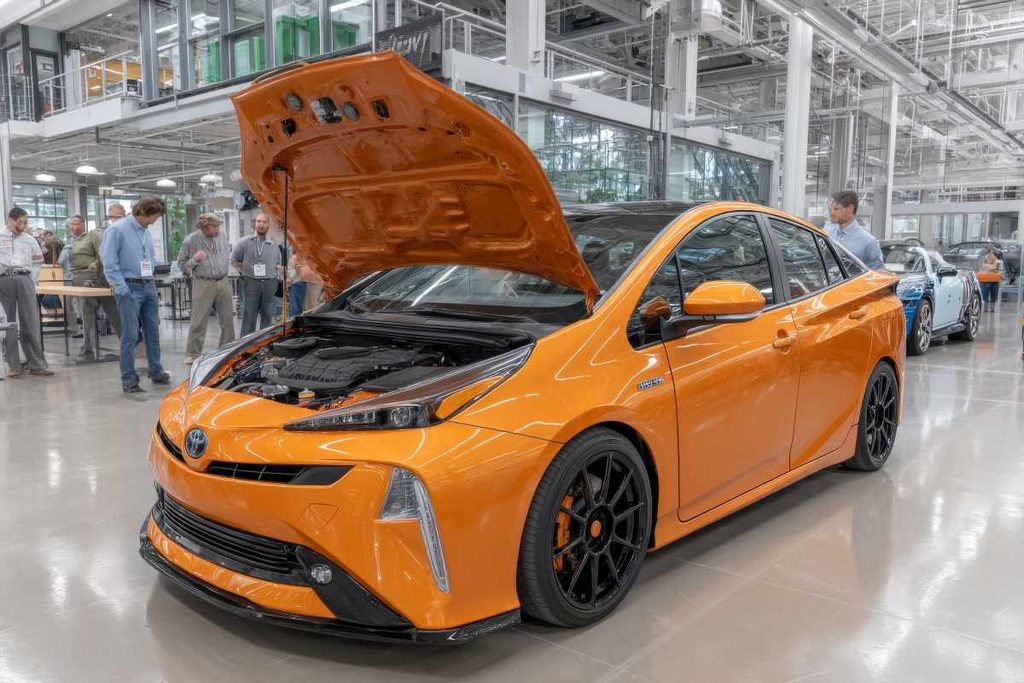
Toyota validates components extensively before production, with long development cycles and durability testing that extends well beyond typical warranty periods. Suppliers are held to the same standards, and supplier relationships tend to be long-term, which builds quality into the parts rather than inspecting for it afterward.
Simplicity Where It Counts
Toyota has generally avoided complexity that doesn’t earn its place. Fewer systems, and simpler versions of the systems that exist, means fewer components able to fail. This is visible in the Land Cruiser and Hilux, engineered for markets where repair infrastructure is limited and serviceability matters more than sophistication.
The hybrid system illustrates the same principle from another direction. The Prius drivetrain has fewer moving parts than a conventional automatic, uses the electric motor to reduce load on the gasoline engine, and its regenerative braking dramatically extends brake life. High-mileage hybrids frequently outlast conventional cars in the same fleet.
What This Means For You As An Owner
Reliability is a starting point, not a guarantee. Toyotas reach very high mileage when maintained and fail like any other car when neglected. Getting the most from one comes down to a few habits:
- Follow the maintenance schedule rather than the longest interval you can find, particularly for oil, which some engines are sensitive about
- Change transmission fluid on a sensible interval even where the manual suggests it isn’t needed, since automatics last longer with fresh fluid
- Service the cooling system, because head gasket and cooling faults are what usually end an otherwise healthy engine
- Address small issues early, since deferred maintenance costs the same on a Toyota as anything else
- Use the correct specifications for fluids and parts rather than approximations
Reliability Rewards Maintenance
The engineering gives you a car capable of very long service. What determines whether you get that service is whether the maintenance schedule is followed with the manufacturer’s own specifications: the right oil grade, the right coolant, the right intervals, and the right torque figures when work is done.
So if you need Toyota service manuals online, our library at emanuals holds more than 5 million manuals, with the full factory schedules, procedures, and specifications behind them. Register for a membership and give a reliable car the maintenance it was designed around.
FAQs
Why are Toyotas so reliable?
They combine proven designs kept in production long enough to refine, conservative engineering margins that keep components working below their limits, consistent manufacturing quality, and extensive validation testing. No single factor explains it, but together they produce low failure rates across the range.
How many miles can a Toyota last?
Well-maintained examples regularly exceed 200,000 miles, and 300,000 is common in models like the Camry, Corolla, Tacoma, and Land Cruiser. Maintenance history matters more than the badge, since neglect ends any engine.
Are Toyota hybrids reliable long-term?
Yes. The hybrid drivetrain has fewer moving parts than a conventional automatic, the gasoline engine works under reduced load, and regenerative braking substantially extends brake component life. Hybrid batteries typically last well beyond their warranty periods.
Do Toyotas still need regular maintenance?
Absolutely. Reliability comes from good engineering supported by scheduled servicing, not instead of it. Oil, transmission fluid, and cooling system service are what allow a Toyota to reach the mileage it’s capable of.
Is Toyota transmission fluid really lifetime fill?
Some manuals describe it that way, and many owners and technicians change it anyway at sensible intervals. Fresh fluid measurably extends automatic transmission life, and the cost of a fluid service is a small fraction of a rebuild.