
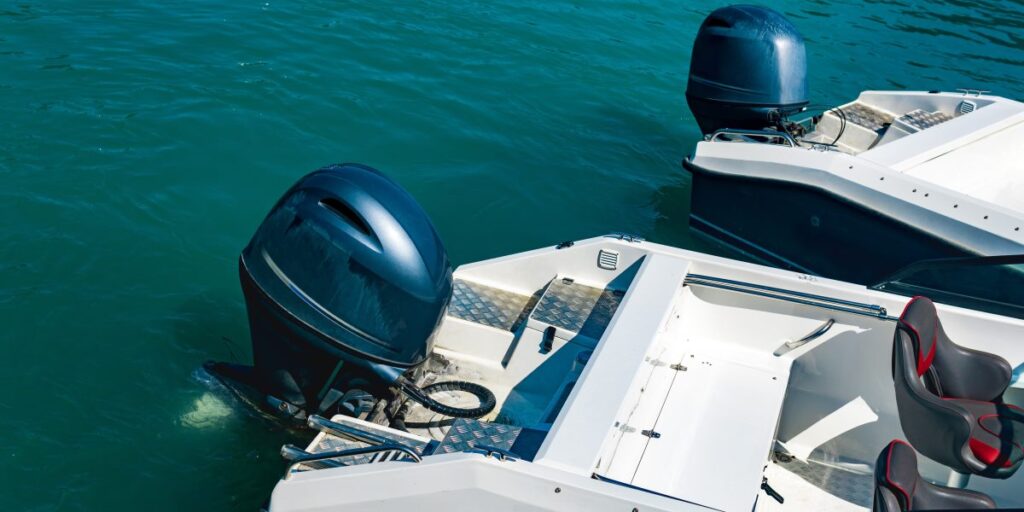
Outboard motors fail to start for a short list of reasons, and the order you check them in makes the difference between a ten minute fix and an afternoon at the ramp. An engine needs fuel, spark, compression, and something to turn it over. Working through those four in sequence narrows the fault quickly.
Here’s what to check, in order of how often each one turns out to be the cause.
Start With The Obvious
Before anything else, confirm the basics:
- The kill switch lanyard is attached
- The engine is in neutral, since outboards won’t crank in gear
- The fuel tank has fuel in it, and the vent on portable tanks is open
- The fuel line is connected at both ends and the primer bulb is firm
- The battery connections are clean and tight
These account for a surprising share of no-starts, and they cost nothing to rule out.
Fuel Problems
Fuel is the most common cause on outboards by a wide margin, because marine fuel systems deal with humidity, long storage periods, and ethanol.
- Stale fuel. Gasoline degrades within about 30 days, and fuel left over a winter turns to varnish in carburetor passages. Symptoms are an engine that cranks with good spark but won’t fire, or one that starts on the primer and dies. Drain the old fuel, clean or rebuild the carburetor, and refill with fresh stabilized gasoline.
- Water in the fuel. Marine tanks breathe humid air, and ethanol fuel absorbs moisture until the mixture separates. Check the water separator and drain it. Water in the tank means the tank needs draining.
- Blocked filters or lines. Check the inline filter, the water separator, and the fuel line for kinks or collapsed sections. Fuel lines harden with age and ethanol exposure, and a cracked line draws air rather than fuel.
- A failed primer bulb. If the bulb won’t firm up, it’s either drawing air or the check valves inside have failed.
- Flooding. An engine that smells strongly of fuel and won’t fire may be flooded. Most outboards have a clear-flood procedure in the manual, usually involving full throttle while cranking with the choke off.
Spark Problems
If fuel checks out, move to ignition. Pull a spark plug, reconnect the lead, ground the plug body against the block, and crank while watching for a strong blue spark. A weak yellow spark or no spark at all points at the ignition system.
Common causes are fouled or worn plugs, cracked plug leads, a failed ignition coil, a faulty stator or trigger, or a safety interlock. Plugs are the cheapest thing to change and worth replacing annually anyway. Read the old ones as you remove them: oil fouling, carbon fouling, and wet fuel each tell you something about what the engine has been doing.
Battery And Starting System
An engine that won’t crank at all, or cranks slowly, has an electrical problem. Check the battery voltage first, then the connections at both ends of every cable including the ground. Marine electrical connections corrode quickly, and a green terminal under a boot causes voltage drop that looks exactly like a dead battery. If voltage is good and the connections are clean, look at the starter solenoid, the starter itself, and the neutral safety switch.
On engines with pull starts, a rope that won’t pull may mean the engine is hydro-locked, which needs investigating before force is applied.
Compression Problems
If the engine has fuel, spark, and cranks normally, and still won’t fire, run a compression test. Readings well below the specification in your manual, or significant variation between cylinders, point at rings, valves, or a head gasket. This is the least common cause of a sudden no-start, and the most serious.
Faults Specific To Outboards
- Cooling water inlet blockage won’t prevent starting, but it will cause a shutdown very quickly afterward, so check the tell-tale stream the moment the engine runs.
- Corroded connections in the wiring harness are more common on outboards than on car engines, since the whole assembly lives in a salt-laden environment.
- Fuel system vacuum leaks at the tank pickup or the connector fitting cause hard starting that gets blamed on the carburetor.
- A submerged or rain-filled engine cowling puts water where it shouldn’t be, and that needs resolving before cranking.
Prevention Is Mostly Fuel Management
Nearly every seasonal no-start traces back to how the engine was stored. Stabilize the fuel, run the carburetor dry before long layups, change the gear oil and check it for water, fog the cylinders on carbureted engines, and keep the battery on a maintainer. Outboards stored properly start on the first or second attempt in spring with dependable regularity.
Get The Procedures For Your Engine
Clear-flood procedures, ignition test values, compression specifications, carburetor settings, and wiring diagrams differ by manufacturer, model, and year, and marine documentation is harder to track down than automotive. At emanuals, you get boat service manuals online covering outboards, sterndrives, and inboards across a library of more than 5 million OEM titles, downloadable and usable without a signal at the ramp.
FAQs
Why won’t my outboard start after winter?
Stale fuel is the most likely cause. Gasoline degrades in around 30 days and leaves deposits in the carburetor, so drain the old fuel, clean the carburetor if needed, fit fresh plugs, and refill with fresh stabilized gasoline.
How do I know if my outboard is flooded?
A strong fuel smell, wet spark plugs, and an engine that cranks without firing all point to flooding. Most outboards have a clear-flood procedure in the manual, typically cranking at full throttle with the choke off.
Why does my outboard crank but not start?
Crank without firing means the engine has a starting system that works and is missing fuel, spark, or compression. Check fuel delivery first, then test for spark at the plug, then run a compression test if both check out.
Can water in the fuel stop an outboard from starting?
Yes. Ethanol gasoline absorbs moisture from humid air, and once the mixture separates the engine draws water instead of fuel. Drain the water separator, and if water is present in quantity, drain and refill the tank.
How often should I replace outboard spark plugs?
Annually for most engines, or at the interval in your manual. They’re inexpensive, they have a direct effect on starting, and the condition of the old plugs tells you useful things about how the engine is running.