

Toyota’s reliability record is well earned, but it doesn’t mean the cars are without known faults. Every manufacturer producing millions of vehicles a year accumulates patterns, and Toyota’s are unusually well documented because the cars stay on the road long enough for those patterns to emerge clearly.
Knowing them helps in two ways: firstly, you’ll recognise a developing problem early, and secondly, you’ll know what to check on a used example.
1. Oil Consumption On Certain Four-Cylinder Engines
The 2AZ-FE engine, fitted to Camry, RAV4, Scion tC, and others through roughly 2007 to 2011, developed a reputation for burning oil. Piston ring design allowed oil past the rings, and consumption rates climbed with mileage.
Toyota addressed it with a revised piston design and extended warranty coverage on affected vehicles. If you own one, check the oil level regularly between changes rather than assuming it will hold.
2. Water Pump Failures
Water pumps across several Toyota engines, including the 2GR-FE V6, tend to weep from the weep hole as the seal wears. It’s a designed warning, and the pump gives notice before it fails outright.
Look for coolant residue around the pump, a low coolant level with no obvious leak, and any whine from the front of the engine. Replacing a pump showing early signs is far cheaper than an overheat.
3. Carbon Buildup On Direct Injection Engines
Newer Toyota engines using direct injection accumulate carbon on the intake valves, since fuel no longer washes across them. Symptoms are rough idle, misfires, hesitation, and lost power, usually appearing somewhere past 60,000 miles.
Toyota’s D-4S system on many engines combines port and direct injection specifically to reduce this, which helps considerably. Engines using direct injection alone are the ones more likely to need intake cleaning.
4. Excessive Oil Sludge On Older Engines
Certain Toyota V6 and four-cylinder engines from roughly 1997 to 2002 developed sludge problems, where oil thickened and blocked passages. Toyota ran a service campaign at the time.
It affected engines run on extended oil change intervals most severely, and the lesson carried forward: these engines want regular oil changes with the correct grade, and a car with unknown service history in that era deserves caution.
5. Dashboard Cracking
Dashboards on a number of Toyota models from the mid-2000s, including Camry, Tacoma, and 4Runner, developed cracks in hot climates. Toyota extended warranty coverage on affected vehicles at the time.
It’s a cosmetic issue with no mechanical consequence, though it affects resale and can be expensive to put right.
6. Frame Rust On Trucks And SUVs
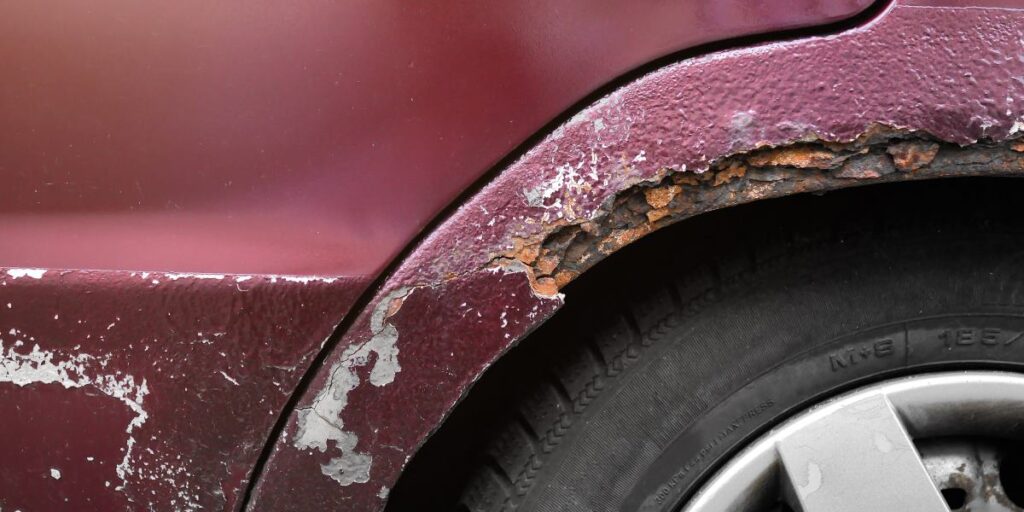
Tacoma, Tundra, and Sequoia models from certain years suffered frame corrosion severe enough that Toyota ran buyback and frame replacement programmes. The affected years span 1995 to 2010 for Tacoma across two separate programs, and 2000 to 2008 for Tundra.
If you’re buying any older Toyota truck, inspect the frame thoroughly, particularly in regions using road salt. This is the one item on this list that can write a vehicle off.
7. Evaporative Emissions Faults
Check engine lights caused by evaporative system faults are common across the Toyota range, and the cause is frequently a loose or failing fuel cap or a failed purge valve. The codes look alarming and the fixes are usually inexpensive.
Check the cap first, and pull the code rather than assuming, since the evaporative system has several components and the code narrows it down.
8. Brake Actuator Issues On Hybrids
Some Prius models, particularly from the second generation, developed brake actuator faults producing warning lights and a change in brake pedal feel. Toyota extended warranty coverage on certain years.
The regenerative braking system means conventional brake components last remarkably long on these cars, so hybrid brake complaints are usually about the actuator and the system rather than pads and discs.
What This List Actually Shows
Most items here affect specific engines in specific production years, and many were addressed by Toyota through revisions, campaigns, or extended warranties. Several were resolved entirely in later versions of the same component.
That’s the useful framing when shopping. A Toyota’s reliability reputation holds up, and the way to benefit from it is to check whether the known item for that particular model year applies to the car in front of you, and whether it’s been dealt with.
Keeping One Healthy
Regular oil changes with the correct grade, cooling system service on schedule, transmission fluid changes even where the manual suggests they aren’t needed, and attention to small symptoms early. These cars reach very high mileage when maintained, and the maintenance is what does it.
Diagnose From The Factory Procedures
Identifying whether a symptom matches a known pattern, and testing properly before replacing parts, both depend on documentation for your exact model and year. At emanuals, you get Toyota workshop repair manuals covering current models and decades of older ones, with the diagnostic procedures, specifications, and torque figures behind every job. Downloads stay yours permanently from a library of over 5 million OEM titles. Start your membership and diagnose from the same data Toyota technicians use.
FAQs
Which Toyota engines burn oil?
The 2AZ-FE four-cylinder, fitted to Camry, RAV4, and Scion tC around 2007 to 2011, is the best known. Toyota revised the piston design and extended warranty coverage on affected vehicles, so check the oil level regularly if you own one.
Do Toyotas have frame rust problems?
Certain Tacoma, Tundra, and Sequoia models from 1995 to 2010 suffered serious frame corrosion, and Toyota ran buyback and frame replacement programmes. Inspect the frame carefully on any older Toyota truck, particularly in salt regions.
Why is my Toyota check engine light on?
Evaporative emissions faults are among the most common causes across the range, often from a loose or failing fuel cap or a failed purge valve. Pull the code with an OBD-II reader to identify which component is involved.
Are Toyota hybrids expensive to maintain?
Generally no. Regenerative braking substantially extends brake component life, and the hybrid drivetrain has fewer moving parts than a conventional automatic. The known item to be aware of is the brake actuator on some earlier Prius models.
At what mileage do Toyota problems start?
Most known items relate to specific engines and years rather than a mileage threshold. Carbon buildup on direct injection engines tends to appear past 60,000 miles, and cooling system components become worth watching from around 80,000, but a maintained Toyota commonly runs well beyond 200,000.