

A leaf blower operates at exceptionally high speeds, ranging from 8,000 RPM for gas two-stroke engines and up to 20,000+ RPM for high-efficiency electric motors. Engines working that hard depend on clean fuel, clean air, and a healthy spark, and nearly every leaf blower that refuses to start in the fall has lost one of those three things over the summer. The maintenance that prevents it takes minutes, costs a few dollars in parts, and follows the same schedule year after year.
In this guide, we’re going to go over the optimal routine for gas models, what changes for battery units, and how to store a blower so it starts on the first or second pull next season.
Fuel Causes Most Of The Problems
Most gas blowers run on a gasoline and oil mix, typically 50:1 or 40:1 depending on the model, and the ratio printed on the housing or in the manual is the one to follow. Too little oil scores the piston, and too much fouls the plug and clogs the exhaust screen.
The bigger issue is fuel age. Pump gasoline with ethanol starts degrading within about 30 days, absorbs moisture, and leaves gum deposits in the tiny passages of a two-stroke carburetor. A blower that sat all summer with spring fuel in the tank will usually surge, bog, or refuse to idle, and the carburetor is the reason. Mix fuel in small batches, add stabilizer if it will sit more than a month, and run the tank dry or drain it before any long storage period.
The Regular Maintenance Routine
Four items cover almost everything on the schedule:
- Air filter. Check it every few uses and clean or replace it when dirty. Foam filters wash in soapy water, dry fully, and take a light coat of filter oil. A blower breathes its own dust all day, so this filter loads up faster than people expect.
- Spark plug. Replace it annually or per the interval in the manual. Check the gap against the specification before installing, since plugs don’t always ship pre-gapped correctly for your engine.
- Fuel filter. The small filter on the end of the fuel line inside the tank is cheap and commonly forgotten. Replace it yearly by fishing the line out with a bent wire.
- Spark arrestor screen. Two-strokes deposit carbon on the small mesh screen in the muffler, and a clogged screen chokes the exhaust and kills power. Remove it, clean it with a wire brush or replace it, and a surprising number of “tired” blowers come back to full strength.
Beyond the engine, clear debris from the cooling fins and the impeller housing, check that fasteners haven’t vibrated loose, and inspect the fuel lines for cracking, since two-stroke fuel lines harden with age and are a common cause of air leaks.
Storage At The End Of The Season
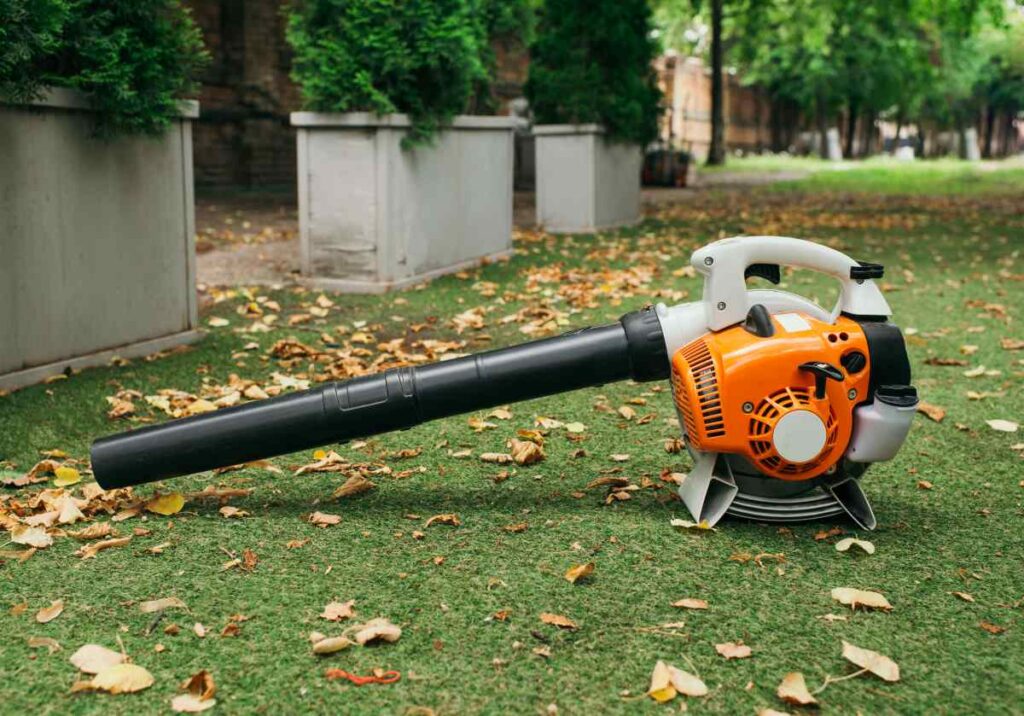
How a blower is put away decides how it wakes up, and the same principle applies across all stored power equipment. The core steps are the same ones covered in our guide to equipment maintenance best practices for larger machines: deal with the fuel, protect the engine internals, and store the machine clean and dry. For a blower specifically, either drain the tank and run the carburetor dry, or fill it with stabilized fuel and run the engine long enough to pull treated fuel through the lines. Pull the plug, add a few drops of two-stroke oil into the cylinder, and turn the engine over gently to coat the bore before reinstalling it.
Battery And Electric Models
Battery blowers remove the entire fuel and spark side of the routine, but they have their own storage rules. Lithium packs stored fully charged or fully flat lose capacity faster, so store them at partial charge, around 40 to 60 percent, somewhere that doesn’t freeze. Keep the intake vents and fan housing clear of debris, and check the trigger and safety switches for grit. Corded models need little beyond a cord inspection for cuts and a clean fan housing.
When The Fix Goes Beyond The Routine
Carburetor rebuilds, ignition coil testing, and fuel line replacement are all within your reach with basic tools, but they’re model-specific jobs. Carburetor adjustment screws have factory settings, fuel line routing differs between brands, and coil air gaps have specifications. That information lives in the service manual for your exact model, and the manufacturer’s documentation for outdoor power equipment is often harder to track down than it is for a car. Our library of home and garden equipment manuals covers blowers, trimmers, mowers, chainsaws, and the rest of the shed, with the factory procedures and specifications for each.
Keep Every Machine In The Shed Running
If the lead blower isn’t the only machine you maintain, an emanuals membership covers the mower, the pressure washer, the snow thrower, and the truck that hauls them, with over 5 million OEM manuals searchable in one place and every PDF downloadable to keep. For the price of one carburetor rebuild at a small engine shop, you get a year of factory documentation for everything you own that burns fuel or holds a charge.
FAQs
What fuel mix does a leaf blower use?
Most gas leaf blowers run a 50:1 or 40:1 gasoline-to-oil ratio, and the correct one is printed on the fuel cap, the housing, or in the manual. Use a two-stroke oil rated for air-cooled engines and measure rather than estimate, since both directions of error cause damage.
Why won’t my leaf blower start after sitting all summer?
Stale fuel is the most likely cause. Ethanol gas degrades within about a month and leaves varnish in the carburetor, so drain the old fuel, clean or rebuild the carburetor if needed, and refill with fresh, stabilized mix before checking anything else.
How often should I replace the spark plug in a leaf blower?
Once a year for typical home use, or at the interval given in the manual if yours works harder. Check the gap against the specification before installing, and inspect the old plug, since heavy carbon fouling points to a rich mixture or a clogged air filter.
Can I use ethanol-free gas in my leaf blower?
Yes, and it’s the better choice for small two-strokes. Ethanol-free fuel stores longer, attracts less moisture, and leaves fewer deposits, which removes the most common cause of small engine trouble at the cost of a slightly higher pump price.
How should I store a battery leaf blower over winter?
Store lithium packs at partial charge, roughly 40 to 60 percent, in a dry spot that stays above freezing. Batteries left fully charged or fully flat through storage lose capacity faster, and cold storage below freezing accelerates the same decline.