
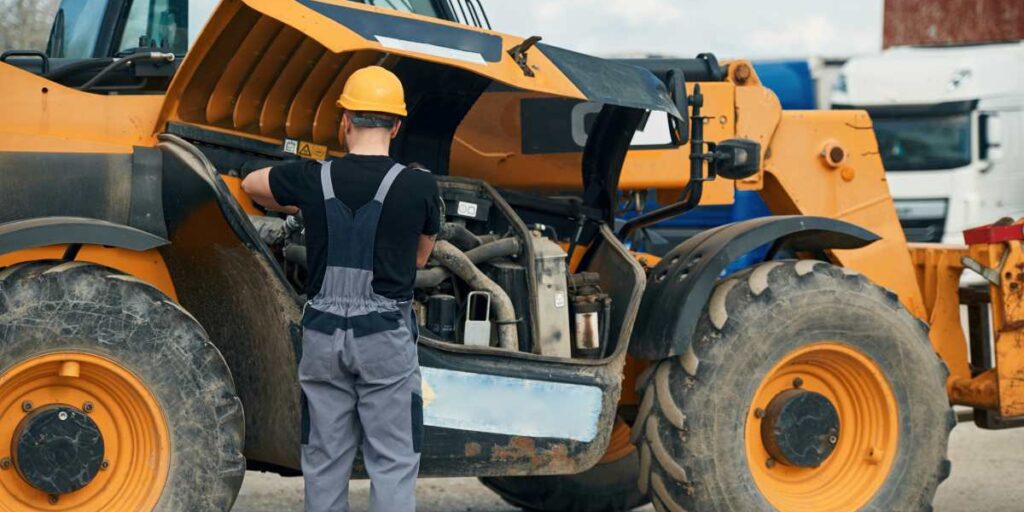
Unplanned downtime is the most expensive line item in fleet operations. Industry estimates put the cost of a stopped excavator or dozer at several hundred to over a thousand dollars per hour once idle crews, rented replacements, and schedule penalties are counted. Preventive maintenance exists to move that cost somewhere manageable: planned service, done on schedule, at a fraction of the price of a failure in the field.
Building a program from scratch is mostly an organizational job. The technical content already exists in the factory documentation for each machine, and to make things simple, we’ve put together a structure for putting it to work.
Start With A Complete Asset List
A program can only cover what it knows about. List every machine in the fleet with its make, model, serial number, year, engine, and current hour reading. Include attachments with their own service needs, such as hydraulic breakers and augers, and the support equipment that usually escapes tracking: compressors, light towers, generators, and trailers. Serial numbers matter because manufacturers change components mid-production, and the correct service data is often serial-range specific.
Pull The Factory Schedule For Each Machine
Every manufacturer publishes service intervals for its equipment, organized by engine hours: what to do at 250, 500, 1,000, and 2,000 hours, along with daily and weekly checks. These schedules, together with fluid specifications, filter part numbers, and torque specs, sit in the OEM service manual for each machine. Collecting the construction equipment service manuals for the whole fleet is the single most useful step in the entire process, because it replaces guesswork and generic intervals with the numbers the manufacturer validated for that machine.
Where a machine works in severe conditions, such as heavy dust, deep mud, or constant high-load work, apply the severe service intervals, which shorten filter and fluid changes considerably. Most construction work qualifies.
Set Triggers And Build The Calendar
Hours drive most intervals, but calendar time matters too, since fluids and rubber components age whether the machine runs or not. Set each task to trigger on hours or months, whichever arrives first. Then map upcoming services against the project schedule, so a 1,000-hour service lands during a planned gap rather than mid-pour. The half-day this planning takes each month is where most of the downtime savings actually come from.
Make Daily Inspections Real
Operator walkarounds catch problems while they’re still cheap: a weeping hydraulic fitting before the hose lets go, low coolant before an overheat, a cracked pin before an attachment drops, and so on and so forth. The keys to making inspections stick are a short standardized checklist per machine type, a defined route around the machine, and a reporting path that visibly leads to repairs. Operators stop reporting defects the first time a report disappears into a drawer.
Greasing belongs in the daily and weekly routine as well. Pins and bushings on construction equipment live or die by grease intervals, and the manual specifies both the points and the grease type.
Track Everything, Per Machine
Records turn a maintenance habit into a program. For each asset, log every service with the date, hour reading, work performed, parts used, and who did it. The records tell you when the next service is due, reveal machines that consume parts faster than their siblings, support warranty claims, and add real money at resale, since documented history is one of the few things a buyer of used iron can verify. Software helps at scale, but a disciplined spreadsheet beats an abandoned platform.
Stock The Predictable Parts
A preventive program makes parts demand predictable, so use that. Keep filters, belts, common hoses, and the fleet’s specified fluids on the shelf in service-interval quantities. A $40 filter that arrives in four days can idle a machine just as thoroughly as a major failure.
Review The Program Quarterly
The first version of the schedule will be wrong somewhere, so be prepared to review breakdown records every quarter and ask what preventive task would have caught each failure, then adjust intervals and checklists accordingly. This feedback loop follows the same logic as preventive equipment maintenance in agriculture, where the machines differ but the principle holds: every failure is information about what to inspect sooner.
Maintenance Made Easy with emanuals
Mixed fleets are the norm, and a yard running Cat, Komatsu, Deere, and Bobcat side by side needs service data for all of them. At emanuals, a membership puts the factory manuals for the entire fleet – along with the trucks that move it and the generators that power the site – into one searchable library of over 5 million titles. Manuals are easily downloadable as PDFs, work offline in the field where site trailers rarely have decent internet, and remain on your drive permanently. Join our community today, and put your maintenance on easy mode.
FAQs
What is preventive maintenance for construction equipment?
Preventive maintenance means servicing machines on a fixed schedule of engine hours and calendar time, using the intervals the manufacturer publishes, instead of repairing after failure. The goal is to move maintenance cost into planned, predictable work performed before components fail in the field.
How often should heavy equipment be serviced?
Manufacturers structure service around engine hours, with typical milestones at 250, 500, 1,000, and 2,000 hours plus daily and weekly checks. Machines working in dust, mud, or constant high-load conditions should follow the severe service intervals, which shorten fluid and filter changes considerably.
What should a daily equipment inspection include?
A standard walkaround covers fluid levels, leaks, tire or track condition, attachment pins and hoses, safety systems, and debris around the engine and cooling package. A short standardized checklist per machine type keeps inspections fast and consistent enough that operators actually complete them.
Do maintenance records affect resale value?
Yes, and noticeably. Documented service history is one of the few claims a used equipment buyer can verify, and machines with complete records sell faster and command stronger prices than identical machines without them.
What’s the difference between preventive and predictive maintenance?
Preventive maintenance follows fixed intervals, while predictive maintenance uses condition data such as oil analysis, telematics, and vibration monitoring to service components when measurements say they need it. Most fleets run preventive schedules as the foundation and layer predictive tools on top for engines and hydraulics.