
Water expands about 9 percent when it freezes, and it does so with enough force to crack an engine block, split a manifold, or burst a water pump housing. That’s the entire reason winterization exists; a cracked block discovered in April can end up costing thousands of dollars to repair, while the winterization that prevents it costs an afternoon of work and some supplies.
Freeze damage is also specifically excluded from most marine insurance policies when the boat wasn’t properly laid up, which makes this one of the least optional jobs in boat ownership.
Just like you need to abide by winter storage best practices for cars, boats also need their own process. Here’s the step-by-step guide to this process, in the order you’ll most likely work through it.
Fuel System First
Fill the tank to about 95 percent to limit condensation, and add a marine fuel stabilizer at the dose on the bottle. Then run the engine for ten minutes or so, on the water or on muffs, so treated fuel reaches the carburetors or injectors. Ethanol-blended gas left untreated over a winter separates and gums the fuel system, and spring carburetor cleanings are the predictable result.
Engine Oil And Gear Oil
Change the engine oil and filter before storage rather than after, because used oil carries acids and moisture that shouldn’t sit against bearings for four months. On sterndrives and outboards, drain and refill the lower unit gear oil too, and pay attention to what comes out: milky oil means water has passed a seal, and that seal needs attention before the boat goes back in, since water trapped in a gearcase can freeze and crack the housing.
Protecting The Engine From Freeze
This is the step where the procedure depends heavily on your exact engine, and where the factory manual earns its place.
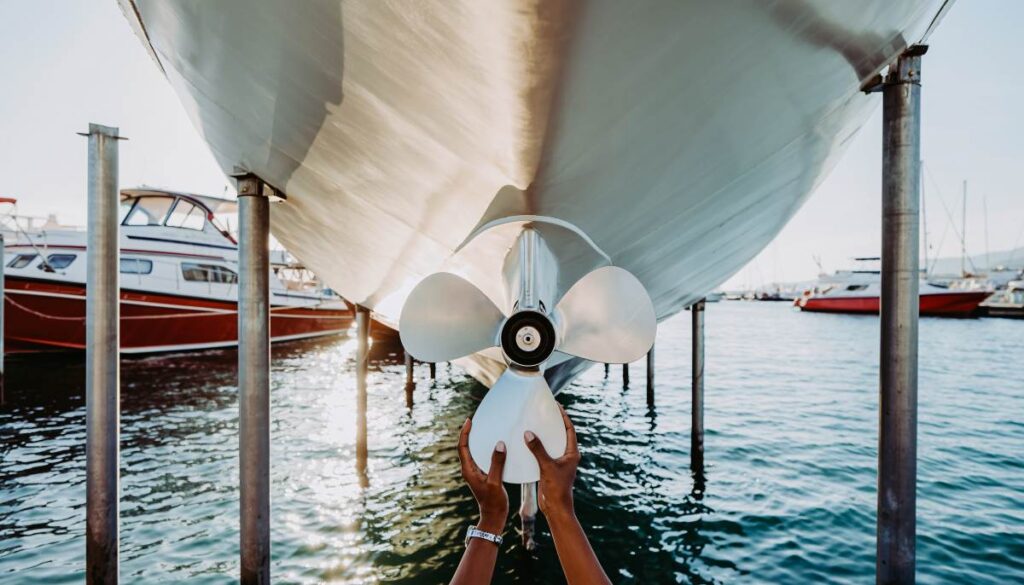
- Outboards are self-draining when stored vertically. Tilt the engine down, let the cooling passages empty, and confirm the tell-tale and drain holes aren’t blocked.
- Inboards and sterndrives hold water in the block, manifolds, and coolers. The standard approach is to drain the raw water system at the block and manifold drain plugs, then run non-toxic propylene glycol antifreeze through the system until it exits the exhaust. The number, location, and order of those drain plugs varies by engine, and a single missed plug leaves a pocket of water exactly where you don’t want one. The marine service manuals for your engine will list every drain point and the winterization sequence that the manufacturer intends.
Fogging comes last on carbureted engines: spray fogging oil into the intake while the engine runs until it stalls, or into the cylinders through the plug holes, to coat the internals against corrosion. Many EFI engines have their own manufacturer procedure instead, which again is a check-the-manual item.
Batteries
Remove the batteries, top up charge, and store them somewhere cool and dry, ideally on a maintainer. A discharged battery freezes at much warmer temperatures than a charged one, and a winter on a concrete floor at 20 percent charge is how batteries fail to survive to spring.
Water Systems And Interior
Drain the freshwater tank, water heater, and lines, then pump non-toxic antifreeze through every faucet, the shower, and the washdown until it runs pink. Do the same for the head and holding tank per its instructions. Inside the boat, remove anything that holds moisture or attracts rodents: cushions, canvas, food, lines, and electronics that shouldn’t freeze. Prop open lockers and the fridge, and place moisture absorbers in the cabin.
Hull, Drive, And Cover
Wash and wax the hull while access is easy, and inspect anodes, props, and bellows on sterndrives, since a cracked bellows over winter means water where it shouldn’t be. Grease the fittings listed in the manual. Then cover the boat properly: shrink wrap or a fitted cover with support poles so water and snow shed rather than pool. Ventilation under the cover matters as much as the cover itself, because a sealed damp boat grows mold by February.
The Procedure That Matters Is Yours
Ready to winterize your boat but not sure where to begin? At emanuals, you get the factory documentation for your exact engine and over 5 million other machines, all in one searchable library. Downloads are yours to keep and work offline, so the lay-up procedure comes with you to the yard. Become a member and winterize from the same data the dealer uses.
FAQs
When should I winterize my boat?
Before the first hard freeze in your area, and practically speaking, as soon as the season ends. Fuel starts degrading the day the boat stops being used, so there’s little benefit in waiting for the weather to force the job.
Do outboard motors need winterizing?
Yes. Outboards self-drain their cooling water when stored vertically, which simplifies freeze protection, but they still need stabilized fuel, fresh gear oil, fogging or the manufacturer’s storage procedure, and battery care like any other engine.
Should I store my boat with a full or empty fuel tank?
Built-in tanks should be stored around 95 percent full with stabilizer added, which limits the air space where condensation forms. Small portable tanks are the exception, since they can simply be emptied into a vehicle or fresh use.
What antifreeze should I use to winterize a boat engine?
Non-toxic propylene glycol marine antifreeze, the pink product, rated for temperatures below the coldest your storage area sees. Automotive ethylene glycol antifreeze doesn’t belong in raw water or freshwater systems, since it’s toxic and eventually discharges overboard.
Can I winterize my boat myself?
You can, and it takes an afternoon with basic tools and supplies. The critical requirement is the winterization procedure for your exact engine, since drain plug locations and fogging steps vary by model, and that procedure comes from the engine’s factory documentation.