

Tractors are serviced by engine hours, not miles, and the hour meter is the honest record of how hard the machine has worked. A tractor that shows 400 hours of loader work in heavy clay has lived a harder year than one that mowed pasture for the same 400, which is why manufacturers publish both normal and severe service intervals. Downtime lands differently on a farm too, since a dead tractor during planting or baling season costs the work itself, not just the repair.
This guide covers the routine that keeps a tractor dependable through the year, from daily checks to seasonal preparation.
The Daily Routine
Five minutes before starting covers the checks that catch most developing problems:
- Engine oil and coolant levels
- Hydraulic fluid level, checked with implements in the position the manual specifies
- Tires, for pressure and sidewall damage
- Air intake and radiator screens, cleared of chaff and debris
- A walk around for leaks, loose fasteners, and anything hanging that shouldn’t be
Field debris deserves particular attention during harvest and mowing. Chaff packed against a radiator causes overheating, and dry material collected around a hot exhaust is a genuine fire risk on combines and tractors alike.
Engine Oil, Filters, And Fuel
Engine oil and filter changes typically fall every 100 to 250 hours depending on the machine, with an annual change regardless of hours for low-use tractors, since oil degrades sitting in the sump. Use the oil specification in the manual rather than a generic diesel oil, particularly on newer emissions-equipped engines where the wrong oil damages after-treatment systems.
Air filters on farm tractors work in the dustiest conditions in the equipment world. Check the restriction indicator if fitted, and resist the urge to blow filters out with compressed air more than once or twice, since a pinhole in a filter element feeds dust straight to the cylinders. Fuel filters and water separators need regular draining and scheduled replacement, because water and diesel bugs in farm fuel storage tanks are common, and modern common-rail injection systems have very little tolerance for either.
Hydraulics And Transmission
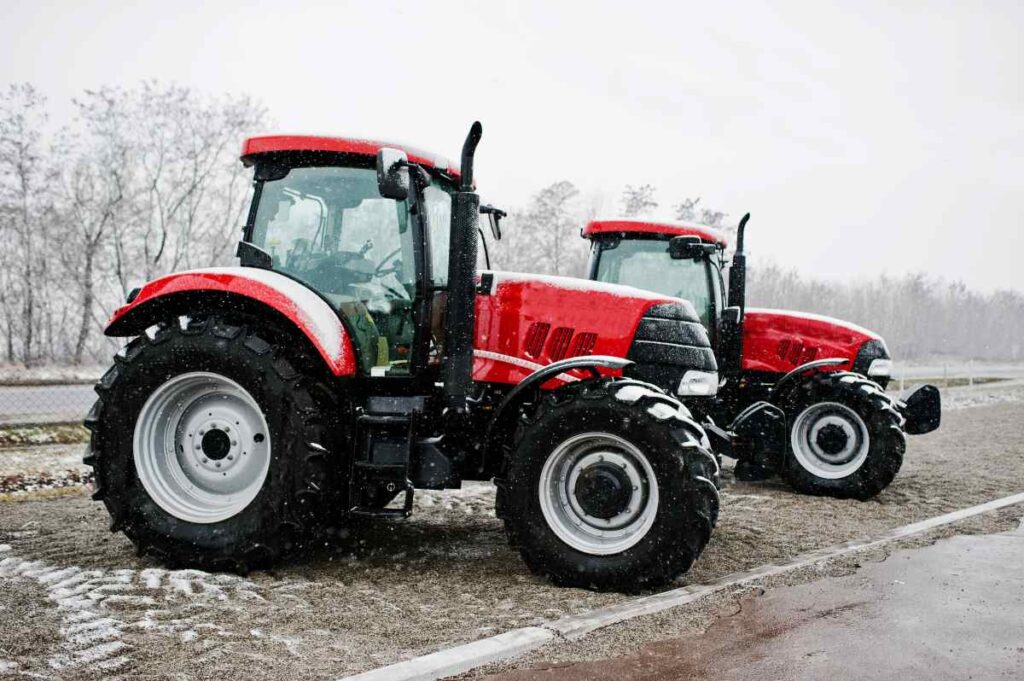
The hydraulic system does the tractor’s actual work, and its fluid runs the loader, the remotes, the hitch, and often the transmission and brakes from a shared reservoir. Change fluid and filters on the factory interval, use the exact specification called for, and treat any new whine, slow lift, or jerky operation as a filter or fluid problem first. Check hoses for chafing where they cross the frame, since a burst hydraulic hose under load is both a downtime event and a safety one.
Grease Is Cheap, Pins Are Not
A tractor carries dozens of grease points across the front axle, steering, loader, three-point hitch, and PTO shafts, each with an interval in the manual, some as frequent as every 10 hours on loader pivots. Worn pins and bushings from missed greasing turn into slop, then into cracked mounts, and the repair costs multiply accordingly. A grease gun on a fixed weekly routine is among the best returns in all of machinery ownership.
Season By Season
Cold weather asks the most of a diesel. Before winter, test the coolant’s freeze protection, condition the batteries, switch to winter-blended fuel or treat against gelling, and check the block heater. Before the heavy spring and summer season, go the other way: cooling system capacity, belt condition, tire ballast, and a full service so the machine enters its busiest months with fresh fluids and filters.
If the tractor parks for the winter, storage follows the standard rules of agricultural equipment maintenance: stabilized fuel, batteries out or maintained, rodent protection, and a clean machine under cover, since dried mud holds moisture against steel all winter.
Keep The Book And Keep Records
Every interval, capacity, specification, and adjustment mentioned above has an exact value for your tractor, published by the manufacturer. Operator’s manuals cover the basics, while the full agricultural equipment service manuals go further, with repair procedures, hydraulic schematics, and diagnostic steps for when maintenance turns into troubleshooting. A written log of hours and work done rounds it out, both for warranty and for the day the tractor is sold.
Tractor Maintenance Made Easy, with emanuals
With an emanuals membership, you get factory manuals for current and long-discontinued machines alike, covering agriculture and every other category of equipment you run. And every PDF you download stays yours for good. Join emanuals and keep the factory data with the machine, where it belongs.
FAQs
How many hours between tractor oil changes?
Most tractors call for engine oil and filter changes every 100 to 250 hours, with an annual change regardless of hours for machines that don’t accumulate many. The exact interval and oil specification for your model are in the manual, and newer emissions-equipped engines are particular about both.
Why does a tractor need greasing so often?
Because its pins and bushings carry heavy loads through constant articulation, and grease is the only thing between them and metal-on-metal wear. Some loader pivot points specify greasing every 10 hours, and skipped intervals show up later as slop, cracked mounts, and expensive pin work.
What causes a tractor to overheat?
Chaff and debris packed against the radiator screens is the most common cause during field work, ahead of low coolant, a stuck thermostat, or a slipping belt. Clearing the screens is a daily-check item for a reason.
Can old fuel cause problems in a tractor?
Yes, in several ways. Stored diesel picks up water and can grow microbial contamination, both of which damage modern injection systems, and untreated fuel gels in winter cold. Drain water separators regularly, treat stored fuel, and switch to winter blends before temperatures drop.
Are tractor maintenance records worth keeping?
They pay off three ways: they tell you what’s due next, they support any warranty claim, and they add real value at sale, since documented history is something a buyer of a used tractor can actually verify.