
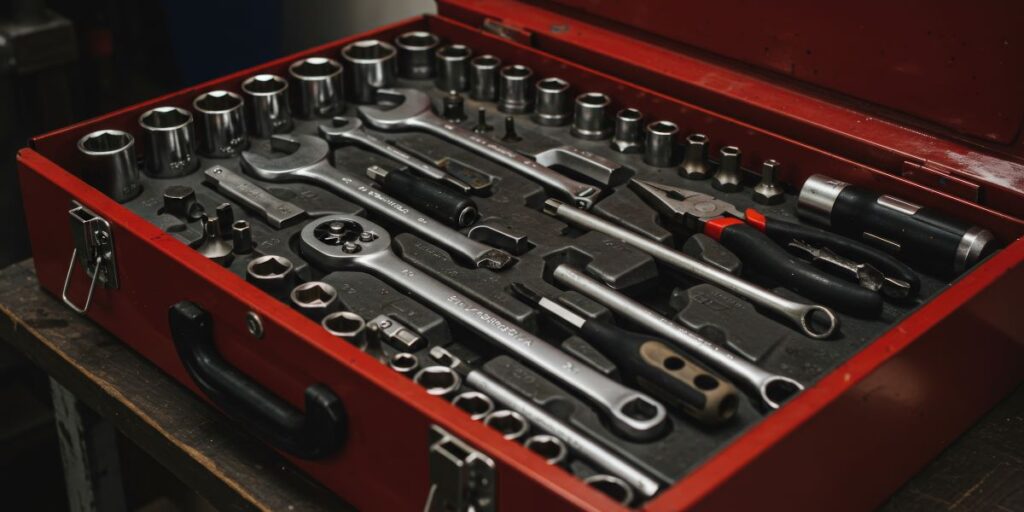
Every mechanic – whether a professional or home-garage – has a drawer of purchases that seemed essential in the store but haven’t touched a fastener since. The mechanics whose boxes hold only tools they use didn’t get there through discipline alone, but through a handful of buying habits you can copy directly.
Here are six of them you can use today.
1. Buy For The Jobs, Not The Catalog
The most reliable filter for any tool purchase is a specific job in front of you that needs it. Before starting a repair, read the procedure in the service manual, which lists the tools and any special equipment the job requires, and buy against that list. This approach builds a collection that exactly matches what you actually work on, and it postpones the purchase of specialty tools until the day they earn their place. The reverse approach, buying a master set and hoping the jobs arrive, is how the unused drawer gets filled.
2. Spend Where Your Hands Live
Quality matters most in the tools used constantly and under load: ratchets, sockets, and combination wrenches. Cheap sockets round fasteners, cheap ratchets slip at the worst moments, and both cost more in damage than they saved at purchase. Mid-tier brands with lifetime warranties hit the sensible point for most of us, and the premium truck brands are lovely without being necessary. Then economize freely on the occasional-use tools, since a trim tool used twice a year performs identically at any price.
3. Buy Measurement Tools Early, Not Last
A torque wrench belongs in the first wave of purchases, well before most of us actually buy one. Fasteners on modern vehicles carry specified torques for real engineering reasons, from head bolts to lug nuts to the drain plug, and guessing produces stripped threads, warped rotors, and comebacks. A click-type 3/8-inch drive wrench covering roughly 15 to 75 ft-lbs handles most work, with a 1/2-inch added later for suspension and lug torques. Store it wound down to its lowest setting and it will stay accurate for years.
4. Match The Toolbox To The Machines
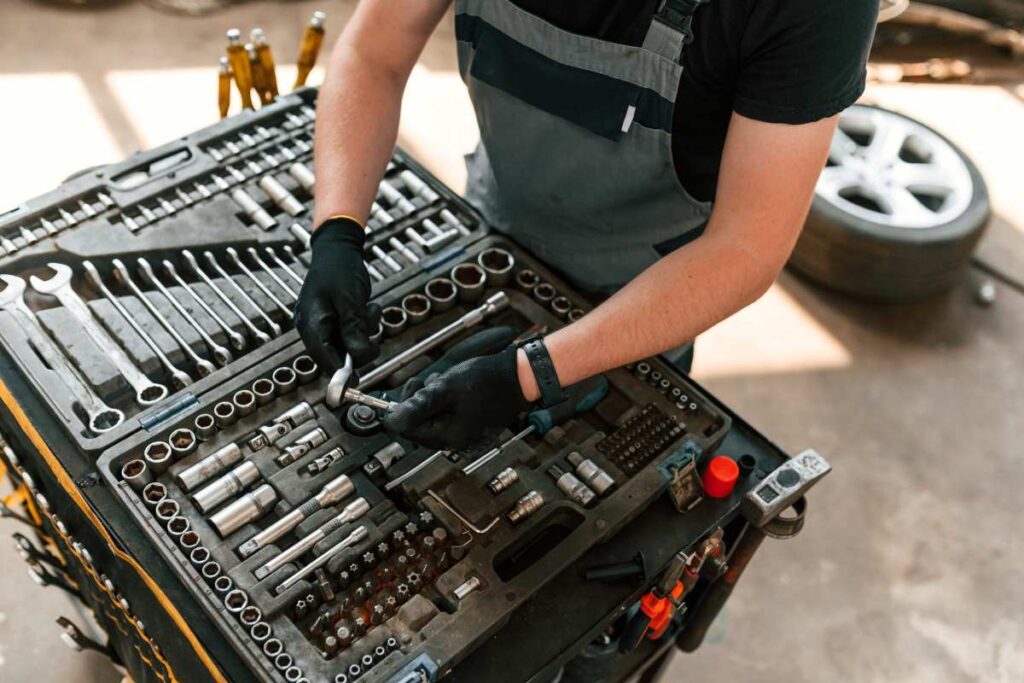
Tools follow the fleet. A garage that services Japanese and European vehicles lives in metric, an older American truck adds SAE, and the machines beyond the driveway bring their own requirements. Motorcycles and ATVs, for instance, lean on tools that car work rarely touches: JIS screwdrivers that fit Japanese fasteners properly, impact drivers for corroded case screws, and carburetor tools that four-wheeled work abandoned a generation ago. The service documentation and off-road vehicle repair resources for those machines spell out what each model needs, which turns powersports tool buying from guesswork into a short list.
5. Treat Diagnostic Equipment As Tools, Because They Are
The wrenches fix the fault, but something has to find it first. A basic kit of diagnostic equipment costs less than a good socket set: an OBD-II reader, a multimeter, a test light, and a mechanic’s stethoscope together run well under $150 and remove more guesswork than any hand tool in the box. Skipping the diagnostic layer leads to the most expensive tool-buying pattern of all, which is buying parts as if they were diagnoses.
6. Let The Used Market Do You A Favor
Hand tools from reputable brands are nearly immortal, and estate sales, pawn shops, and online listings sell decades of remaining service life at a steep discount. Used ratchets can be rebuilt, sockets barely wear, and older USA-made lines are frequently better than their modern budget equivalents. The exceptions run the other way: torque wrenches of unknown history need calibration checks, and used electrical or lifting equipment deserves skepticism, since those failures have consequences.
The Cheapest Tool In The Garage: emanuals Membership
With emanuals, you get the factory manuals that list the exact tools, specs, and procedures for every job, across every machine you own, for less per month than a decent ratchet. Get started and join a community of DIYers and working techs who plan their jobs the same way.
FAQs
What tools should a beginner mechanic buy first?
A 3/8-inch metric socket set, combination wrenches, screwdrivers, pliers, a torque wrench, and a floor jack with jack stands. That core covers the standard maintenance schedule of most vehicles, and everything beyond it can wait for the job that requires it.
Are expensive tool brands worth the money?
For the tools used constantly under load, meaning ratchets, sockets, and wrenches, mid-tier quality with a lifetime warranty is worth paying for. For occasional-use and specialty tools, budget versions perform the same few tasks per year without complaint.
Do I really need a torque wrench for basic repairs?
Yes, and earlier than you might think. Lug nuts, drain plugs, and caliper bolts all carry factory torque specifications, and the failures caused by guessing, from stripped threads to warped rotors, cost more than the wrench.
Is it safe to buy used tools?
Used hand tools from reputable brands are one of the best values in the hobby, since sockets barely wear and ratchets can be rebuilt. The exceptions are torque wrenches, which need a calibration check after unknown history, and lifting or electrical equipment, where failures carry real consequences.
How do I know which tools a specific repair needs?
The service manual for your vehicle lists the tools, and any special equipment, at the start of each procedure. Reading the procedure before starting tells you what to buy, what to rent, and occasionally that the job is better left alone, all before anything comes apart.