
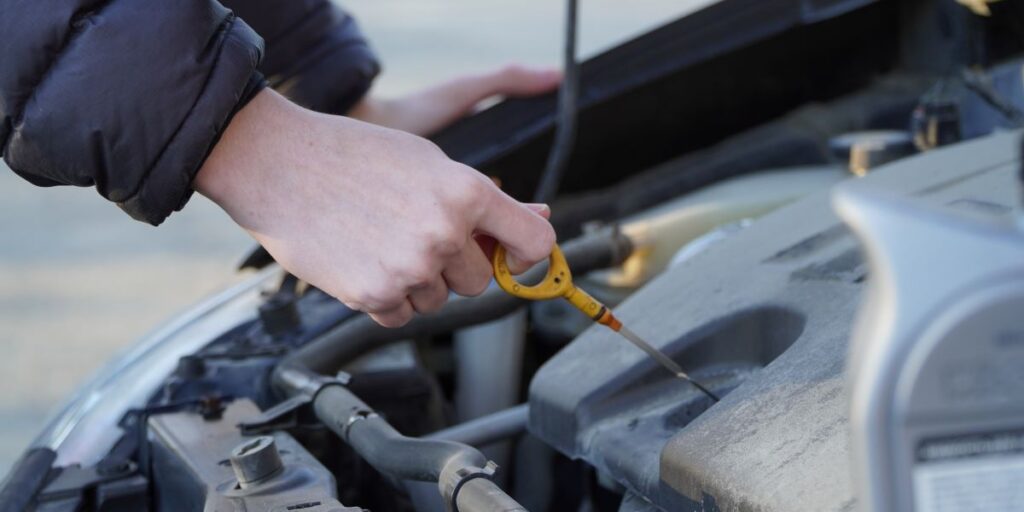
Here’s a fact: your car maintenance knowledge compounds with time. Each system you understand makes the next one easier to learn, because vehicles reuse the same principles everywhere: fluids lubricate and cool, filters protect, sensors report, and fasteners hold to a specified torque. The people who seem to know everything about cars mostly learned one thing at a time, on their own vehicles, and the same path is open to you.
PS – when we talk about “car maintenance IQ” we’re really just talking about how well you know your vehicle, and how easily you’re able to maintain it without having to hire expensive professionals for things you could easily – and safely – do yourself.
Here are seven practical ways to build that knowledge.
1. Actually Read The Owner’s Manual
This might be unfashionable advice for some, but it’s the highest-value hour you can spend on your car. The manual in the glovebox contains the maintenance schedule, fluid specifications, tire pressures, fuse locations, warning light meanings, and the answers to most questions you’d otherwise pay to have answered. Reading it once, cover to cover, is incredibly valuable.
2. Learn What Your Car Actually Is
No matter what type of car you have, you should learn to read your VIN, find your engine code, and identify your transmission. This is because every specification you’ll ever look up depends on getting this right: parts stores and service data will both ask you these questions first, and the answers live on the door jamb sticker, under the hood, and in the VIN itself.
3. Do Your Own Basic Services
If you can, try to start with the jobs that are hard to get wrong: wiper blades, air filters, bulbs, then oil changes and tire rotations once you have jack stands and a torque wrench. Each job teaches the layout of your vehicle, the location of its service points, and the feel of fasteners done correctly, and that familiarity is what’s going to make the next, bigger job approachable.
4. Pull Your Own Trouble Codes
Reading codes, looking up what they mean, and understanding what the sensor in question actually measures is the fastest route into understanding how modern vehicles work and learning vehicle diagnostic. It builds the vocabulary too, and this makes every later diagnostic conversation easier, whether you fix the fault yourself or take it in with your eyes open.
5. Follow The Factory Data, Question The Forums
Forums and videos are genuinely useful for seeing a job done and learning the tricks specific to your model. Their weakness is accuracy at the level of specifications, since a confident post about torque figures or fluid types may be wrong, outdated, or about a different variant of your car. The working method is to use community content for orientation and the factory documentation for numbers. When the forum and the manual disagree, the manual wins, and knowing that rule is itself a large piece of maintenance IQ.
6. Keep A Log
A simple record of every service, with date, mileage, work done, and parts used, does quiet work over the years. It reveals your car’s patterns, tells you what’s due next, protects the warranty, supports resale, and turns vague memories into data. Reading your own log after two years teaches you things about your vehicle that no general article can.
7. Learn One System At A Time
Trying to understand a whole car at once produces overwhelm and not much else. Take systems in turn: brakes one season, cooling the next, then charging and starting, then suspension. For each one, read how it works in principle, find its components on your own vehicle, and do one job on it.
Learn With emanuals
At emanuals, you can start with a 3-day free trial and pull the full factory data for your own car, then keep learning across a library that covers every category of machine. From engine workshop manuals to motorbike repair manuals, you can start your free trial and learn from the same source material the professionals use – with 5 million manuals all in one place.
FAQs
What’s the easiest way to start learning car maintenance?
Read your owner’s manual fully, then do the simplest services on your own car: wipers, air filters, and bulbs, progressing to oil changes and rotations as tools arrive. Knowledge built by doing sticks far better than knowledge from reading alone.
What does the check engine light actually mean?
It means the engine computer has detected a fault and stored a diagnostic trouble code. A $25 OBD-II reader shows you the code, which identifies the system involved and gives you a starting point, whether you repair it yourself or take it in informed.
Are YouTube tutorials reliable for car repair?
They’re excellent for seeing how a job is done and learning model-specific tricks, and unreliable as a source of specifications. Verify torque values, fluid types, and capacities against the factory documentation, and treat any conflict between the two as settled in the factory’s favor.
What maintenance can a complete beginner do?
Wiper blades, cabin and engine air filters, and bulbs need almost no tools. With a jack, jack stands, and a torque wrench, oil changes, tire rotations, and battery replacement all become beginner-appropriate jobs with clear procedures.
Why should I keep a maintenance log?
A log tells you what’s due next, reveals your car’s patterns over time, protects warranty coverage by documenting that services happened, and adds credibility at resale. Date, mileage, work done, and parts used is all it takes.