
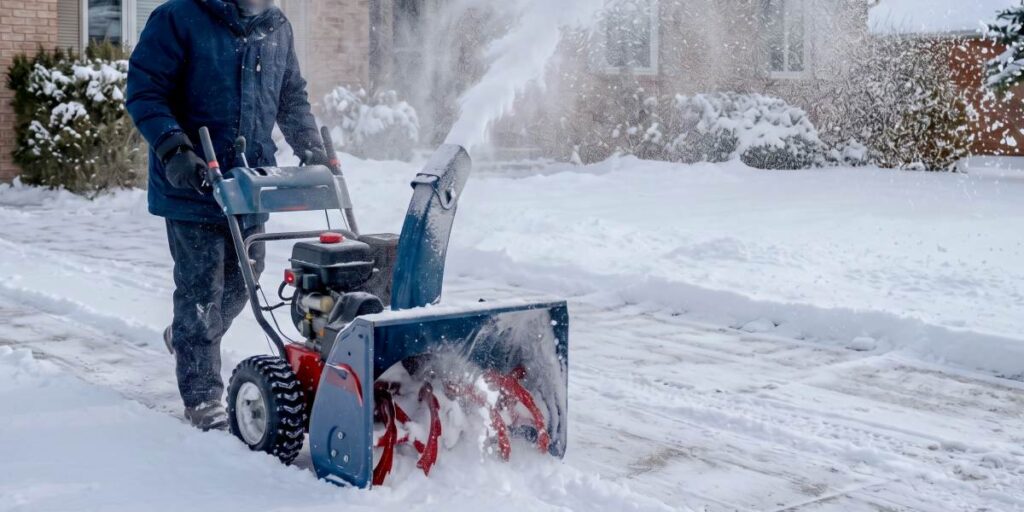
A snow blower spends most of the year sitting still and then gets asked to work hard on short notice, usually in cold weather at an inconvenient hour. Machines that start reliably in those conditions are almost always the ones serviced in fall rather than at the first snowfall. The work takes an afternoon and covers the whole season.
Here’s what to do before the weather arrives.
Deal With The Fuel First
Fuel causes more no-start situations than every mechanical fault combined. Gasoline with ethanol degrades within about 30 days, absorbs moisture, and leaves deposits in carburetor passages.
If the machine was stored with fuel in it, drain the tank and the carburetor bowl and refill with fresh gasoline treated with stabilizer. If it was stored dry, fill with fresh stabilized fuel now. Either way, run the engine for several minutes so treated fuel reaches the carburetor rather than sitting in the tank. Two-stage blowers with four-stroke engines take straight gasoline, while single-stage machines with two-stroke engines need the fuel and oil mix printed on the machine, so check which you have before mixing anything.
Change The Oil
Four-stroke engines need an oil change before the season, using the grade specified for cold operation, which is commonly 5W-30 in a snow blower where the same engine in summer equipment might take 10W-30. Cold-weather oil grade matters here more than in most equipment, since thick oil at 10 degrees makes an engine hard to turn over and slow to build pressure. Check the level on a flat surface, and while you’re there, inspect for leaks around the crankcase and the drain plug.
Spark Plug And Ignition
Replace the spark plug annually or at the interval in the manual, gapped to the specification. Cold starting depends heavily on a strong spark, and a plug that worked adequately in fall temperatures can fail to fire in January. Inspect the plug lead for cracking and make sure the boot seats firmly, since a loose connection produces intermittent running that looks like a fuel problem.
Check The Belts
Belts drive the auger and the wheels on most machines, and they wear from use and age even when the blower has been sitting. Look for cracking, glazing, fraying, and missing chunks, and check the tension against the specification. A belt that snaps mid-storm ends the job, so replacing a marginal belt in October costs a great deal less inconvenience than replacing a broken one in February. Keep a spare set on the shelf if your machine is your only option for clearing the drive.
Auger, Shear Pins, And Skid Shoes
Shear pins are designed to break when the auger hits something solid, protecting the gearbox and the impeller. Check yours are intact and correct, and keep spares on hand, since they break at exactly the moment you need the machine working. Never substitute a standard bolt for a shear pin, because the pin is meant to be the weak point, and replacing it with something stronger transfers the damage to the gearbox.
Inspect the auger blades and the scraper bar for wear, and set the skid shoes so the scraper sits at the right height for your surface. Gravel drives need the shoes set higher to keep the machine from picking up stones.
Grease, Chains, And Cables
Lubricate the points listed in your manual, which typically include the auger shaft, the chassis pivots, and the chute rotation mechanism. Auger shaft greasing matters particularly on machines stored through humid summers, since a seized auger on a shaft is a common and irritating fault. Check the drive and chute control cables for smooth operation, adjust where they’ve stretched, and put a small amount of lubricant on the chute gear so it turns freely when your hands are cold.
Tires And Traction
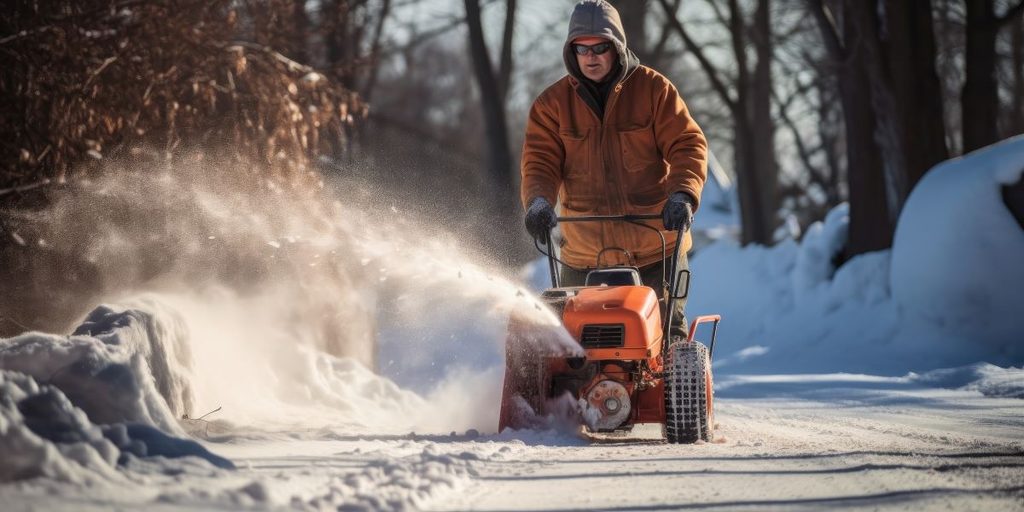
Check tire pressure, since both tires need to match for the machine to track straight, and pressures drop over a warm summer in storage. Inspect the tread and any chains you use. On tracked machines, check track tension against the manual.
Electric Start And Battery Models
If your blower has an electric starter, test it now rather than discovering a problem during a storm. Battery-powered machines need their packs stored at partial charge somewhere above freezing, and a battery that has been sitting at full charge in a cold garage all summer may have lost capacity, so test the runtime before you depend on it.
Run It Before You Need It
Start the machine and let it run for ten minutes, engage the auger, rotate the chute through its full range, and test the drive in each gear. Everything that’s going to fail is better discovered on a dry afternoon than at 6am with six inches on the ground.
Keep The Manual With The Machine
Belt part numbers, shear pin specifications, grease points, oil grades, and cable adjustment procedures all differ by make and model, and small equipment documentation has a habit of disappearing years before the machine does. At emanuals, you get access to all of our home appliance service manuals and outdoor power equipment documentation for the machines around your property, in a library of over 5 million manuals with every download yours to keep. Set up a membership and go into winter with the factory data on hand!
FAQs
When should I service my snow blower?
Ideally in the fall, before the first snowfall, so that any parts you need arrive while suppliers still have stock. Servicing at the first storm means competing with everyone else for belts, shear pins, and shop time.
What oil does a snow blower take?
Most four-stroke snow blower engines specify 5W-30 for cold weather operation, though the exact grade is in your manual. Cold-weather grade matters more here than in summer equipment, since thick oil makes a cold engine difficult to start.
Why won’t my snow blower start after summer storage?
Old fuel is the most likely cause, followed by a worn spark plug and a dead starter battery on electric-start models. Drain the stale gasoline, clean the carburetor if needed, refill with fresh stabilized fuel, and fit a new plug before looking further.
How often should I replace shear pins?
Whenever one breaks, which is what they are designed to do when the auger strikes an obstruction. Keep spares on hand and always use the correct pin, since substituting a stronger bolt transfers the impact damage to the auger gearbox.
Can I use car gasoline in my snow blower?
Yes, provided it’s fresh and treated with stabilizer, and provided you match the fuel type your engine takes. Two-stroke single-stage machines need the specified gasoline and oil mix, while four-stroke two-stage machines run straight gasoline with oil in the crankcase.