

Oil leaks are among the most frequent complaints on higher-mileage Mercedes-Benz vehicles, and they follow a predictable pattern. Gaskets and seals made from rubber compounds harden over years of heat cycling, lose their ability to seal, and begin weeping. The engines themselves are durable, which means plenty of cars reach the mileage where these components need attention.
The useful part is that Mercedes leaks come from a small number of known locations. Working out which one you have is mostly a matter of knowing where to look.
Start By Finding The Source
Oil travels. It runs down the back of an engine, along the sump rail, and drips from a point well away from where it started, which is why leaks get misdiagnosed regularly.
A reliable approach:
- Clean the engine thoroughly, using a degreaser and taking care around electrical connectors
- Run the car for a few days of normal driving
- Inspect with a bright light, working from the top down
- If the source isn’t obvious, add UV dye to the oil, drive it, then inspect with a UV lamp
The dye method is worth the small cost, since it converts a search into a direct answer.
1. Valve Cover Gasket
The most common leak on almost any Mercedes engine. The gasket sits at the top of the engine and hardens with heat until it stops sealing.
Signs are oil around the edge of the valve cover, a burning smell as oil reaches the exhaust manifold, and smoke from the engine bay. On engines with coil packs sitting in wells within the cover, a failed gasket also lets oil into those wells, which causes misfires.
It’s a relatively straightforward job on most engines and one of the cheaper leaks to fix.
2. Oil Filter Housing Gasket
A very common source, and one that frequently gets blamed on other components because of where the oil ends up. The housing sits high on the engine on many Mercedes designs, and a failed gasket lets oil run down across the block, the starter, and the transmission bell housing.
If you have oil across a wide area of the lower engine with no obvious single source, this is worth checking early.
3. Rear Main Seal
This seal sits between the engine and the transmission, around the rear of the crankshaft. Oil appears at the bell housing and drips from the lowest point where the two meet.
Diagnosis needs care, because a transmission front seal leak presents identically from underneath. The distinction matters, since both require separating the engine and transmission and the parts differ. Mercedes automatic transmission fluid is usually red, which helps distinguish it from engine oil.
This is a labor-intensive repair, and it’s worth combining with a clutch or torque converter job if either is due.
4. Oil Pan Gasket
The sump gasket hardens like any other, and on some Mercedes models the pan is awkward to access, which makes the repair more involved than the part cost suggests. Look for oil along the pan rail and dripping from the lowest point of the engine.
Also check the drain plug and its washer, since an over-tightened plug or a reused crush washer causes a leak that looks like a pan gasket at first glance.
5. Camshaft Position Sensor And Cam Adjuster Seals
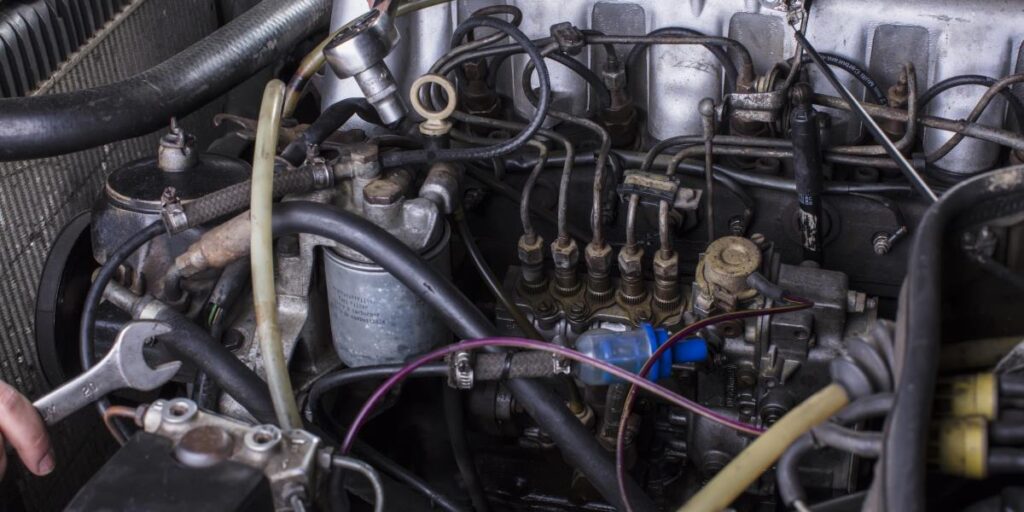
The seals around camshaft position sensors and cam adjuster solenoids harden and leak, typically producing oil at the front of the cylinder head. On V-engines the leak can be hard to see, sitting down in the V.
These are inexpensive parts and a common cause of a persistent small leak that survives a valve cover gasket replacement.
6. Turbocharger Oil Lines
On turbocharged engines, the feed and return lines carry oil under pressure to the turbo and back. The seals at either end and the lines themselves degrade with heat, and a leak here drops oil onto hot components directly.
This one deserves prompt attention because of where the oil lands.
7. Oil Cooler Seals
Several Mercedes engines use an oil cooler mounted in the V of the engine or alongside it, sealed with O-rings that harden over time. A leak here can be substantial and often presents as oil appearing from the middle of the engine with no obvious path.
The repair requires significant disassembly on some engines, which makes accurate diagnosis particularly worthwhile before starting.
How Serious Is A Leak?
It depends entirely on rate and location.
Monitor: a light weep that leaves a small spot occasionally, with no measurable oil consumption.
Address soon: any leak dropping oil onto the exhaust, the alternator, the starter, or the belt, since oil on those components causes secondary failures and, in the case of the exhaust, a fire risk.
Address immediately: any leak producing measurable oil loss between changes, or a sudden increase in rate.
Check the oil level regularly with any known leak, since running an engine low causes far more damage than the leak itself.
Before You Order Parts
Confirm what the fluid actually is. Engine oil is amber to black, Mercedes transmission fluid is usually red, power steering fluid varies, and coolant is distinctly different in colour and texture. Diagnosing an oil leak that turns out to be power steering fluid wastes a weekend.
Then confirm the source rather than assuming, because several of these leaks land oil in the same place.
Diagnose From The Factory Documentation
Component locations, torque figures, and the correct gasket and seal part numbers vary by engine and model year, and Mercedes changes details between them more often than people expect. When you join the emanuals community, you get access to all possible OEM Mercedes repair manuals, with the procedures and specifications for your exact chassis. Drawn from more than 5 million OEM titles where every download is yours to keep, it’s the easiest way to keep things rolling smoothly.
FAQs
What is the most common oil leak on a Mercedes?
The valve cover gasket, followed closely by the oil filter housing gasket. Both harden with heat over time, and both are common on higher-mileage cars regardless of how well the vehicle has been maintained.
Is it safe to drive a Mercedes with an oil leak?
A light weep with no measurable oil loss can be monitored, provided you check the level regularly. Any leak dropping oil onto the exhaust, alternator, or belt needs attention promptly, since it can cause secondary failures or a fire risk.
How do I find where an oil leak is coming from?
Clean the engine thoroughly, drive it for a few days, then inspect with a bright light from the top down. If the source still isn’t clear, add UV dye to the oil and inspect with a UV lamp, which identifies the origin directly.
How much does it cost to fix a Mercedes oil leak?
It varies enormously by location. A valve cover gasket is among the cheaper repairs, while a rear main seal requires separating the engine and transmission and costs many times more. Accurate diagnosis before ordering parts is what keeps the cost proportionate.
Why does my Mercedes smell of burning oil?
Oil is reaching a hot surface, usually the exhaust manifold, most often from a leaking valve cover gasket. It’s worth locating and fixing promptly, since oil on hot exhaust components is a genuine fire risk.