
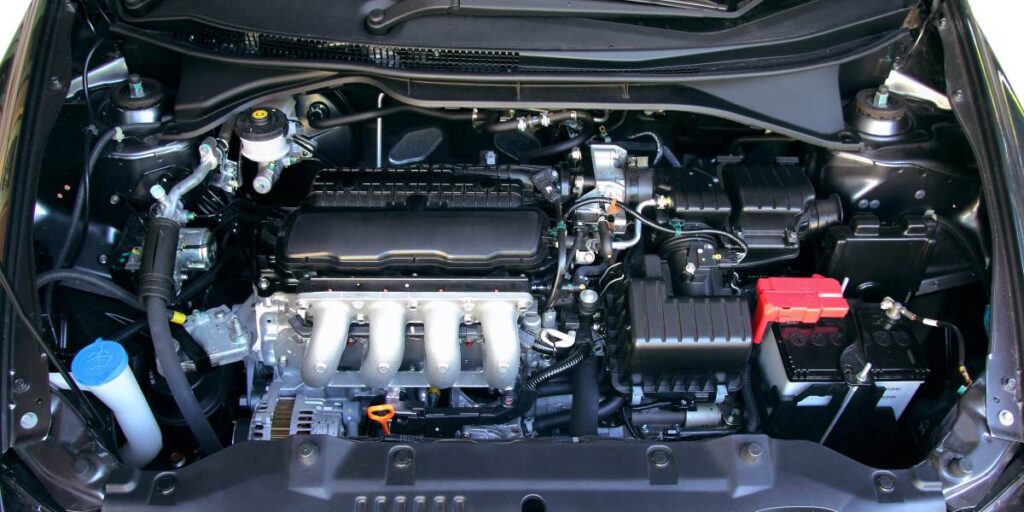
The difference sits in how many piston movements it takes to complete one power cycle. A four-stroke engine needs four, which is two full turns of the crankshaft. A two-stroke needs two, which is one turn. That single distinction produces every other difference between them: weight, power delivery, lubrication, emissions, maintenance, and where each one ends up being used.
Here’s how the two compare, and why both still exist.
How Each One Works
- Four-stroke separates the four events. Intake draws the mixture in, compression squeezes it, combustion drives the piston down, and exhaust pushes the burned gases out. Each event gets its own stroke, and valves controlled by a camshaft open and close at the right moments.
- Two-stroke combines them. As the piston rises it compresses the mixture above while drawing fresh mixture into the crankcase below. Near the top, ignition drives the piston down, and as it descends it uncovers ports in the cylinder wall: the exhaust port releases burned gases while the transfer port admits the fresh charge from the crankcase, which helps push the remaining exhaust out. No valves, no camshaft, no timing belt.
Power And Weight
A two-stroke fires once per crankshaft revolution against the four-stroke’s once every two, so for the same displacement it produces roughly twice as many power strokes. Real-world gains fall short of double because of the inefficiency of that port-based gas exchange, but the power-to-weight advantage remains substantial.
Two-strokes also carry far fewer parts. No valve train, no camshaft, no oil pump on most designs. That means less weight, less complexity, and a shape that works in any orientation, which is why a chainsaw can be held sideways without oil starvation.
Lubrication
- Four-stroke engines keep oil in a sump, circulate it under pressure, and keep it separate from the combustion process. You change it on an interval.
- Two-stroke engines mix oil with the fuel, typically at 50:1 or 40:1, so lubrication arrives with the charge and gets burned along with it. Some larger two-strokes use oil injection that meters oil automatically.
This is where most of the practical differences originate. Burned oil means visible exhaust smoke, higher emissions, and carbon deposits. It also means constant attention to mix ratio, since too little oil scores the piston and too much fouls plugs and clogs the exhaust.
Fuel Economy And Emissions
Four-strokes win clearly on both. Because a two-stroke’s exhaust and transfer ports are open at the same moment, some fresh fuel mixture escapes into the exhaust unburned. That loss costs fuel economy directly and puts raw hydrocarbons into the air, on top of the burned oil.
Emissions regulation is the main reason two-strokes disappeared from motorcycles, cars, and most outboards. Modern direct-injection two-strokes address a good deal of this by injecting fuel after the exhaust port closes, and they survive in marine applications for that reason.
Maintenance And Service Life
- Four-strokes need oil changes, filter changes, valve clearance checks, and timing belt or chain attention. More items on the schedule, and each one is straightforward.
- Two-strokes need very little scheduled maintenance because there’s less to service. What they need instead is correct fuel mixing, regular spark plug replacement, decarbonising of the exhaust port and spark arrestor, and attention to fuel freshness. Piston and ring wear also arrives sooner, since the piston passes over open ports and the lubrication is less thorough.
Four-strokes last longer in hours, which is a large part of why they took over in equipment expected to run for years.
Where Each One Is Used Today
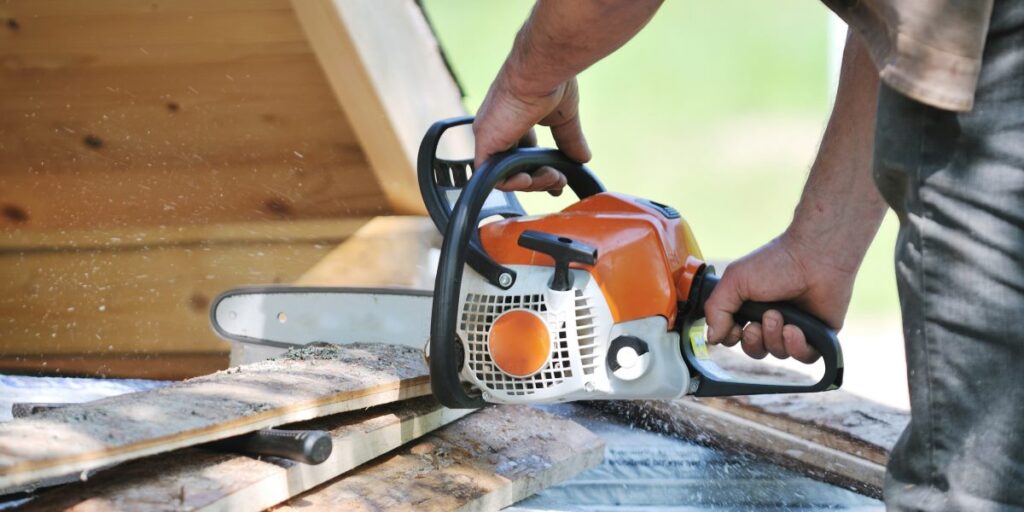
- Four-stroke: cars, motorcycles, most modern outboards, generators, lawn mowers, pressure washers, most modern snow blowers, and nearly all agricultural and construction equipment.
- Two-stroke: chainsaws, string trimmers, leaf blowers, some outboards, dirt bikes in certain classes, and small marine and industrial applications where weight and power density matter more than emissions or fuel economy.
The pattern is straightforward. Where a machine is carried by a person, or needs to run at any angle, or benefits from being light, two-strokes hold their ground. Where a machine runs for long hours and emissions matter, four-strokes took over.
Which Should You Choose?
For equipment you’re buying, the decision is usually made for you by what’s available in that category. Where both exist, such as some outboards and some handheld tools:
- Choose two-stroke for lightness, simplicity, power for the weight, and the ability to operate at any angle.
- Choose four-stroke for fuel economy, lower noise and emissions, longer service life, and not having to mix fuel.
What It Means For Maintenance
Knowing which type you have determines your whole routine. Two-strokes want correct mix ratios, fresh fuel, frequent plug changes, and periodic decarbonising. Four-strokes want oil changes, filter service, and valve attention on schedule.
Get The Manual For Your Engine
Mix ratios, plug gaps, port cleaning procedures, valve clearances, and torque figures are all engine-specific. At emanuals, you get online engine repair guides covering two-stroke and four-stroke engines across automotive, marine, powersports, and equipment applications, drawn from more than 5 million OEM titles. And what’s more, every download stays yours. Sign up today and service your engine to the figures its manufacturer published.
FAQs
Which is better, a two-stroke or a four-stroke engine?
Neither is better across the board. Two-strokes offer more power for their weight, fewer parts, and operation at any angle. Four-strokes offer better fuel economy, lower emissions, less noise, and longer service life. The right choice depends on the application.
Why do two-stroke engines mix oil with the fuel?
They have no separate oil sump or pressurised lubrication system, so oil arrives with the fuel charge and lubricates the crankshaft, bearings, and cylinder as it passes through. It’s then burned along with the fuel, which is why two-strokes smoke.
Do two-stroke engines last as long as four-strokes?
Generally no. The piston passes over open ports in the cylinder wall and lubrication is less thorough, so piston and ring wear arrives sooner. Four-strokes typically deliver considerably more running hours before a rebuild.
Why are two-stroke engines being phased out?
Emissions. Some fresh fuel mixture escapes through the exhaust port during the gas exchange, and the oil burned with the fuel adds to that. Tightening regulations pushed manufacturers toward four-strokes and direct-injection two-strokes in most applications.
Can I use regular gasoline in a two-stroke engine?
Only mixed with two-stroke oil at the ratio specified for your engine, commonly 50:1 or 40:1. Running straight gasoline through a two-stroke that needs premix destroys it very quickly.