
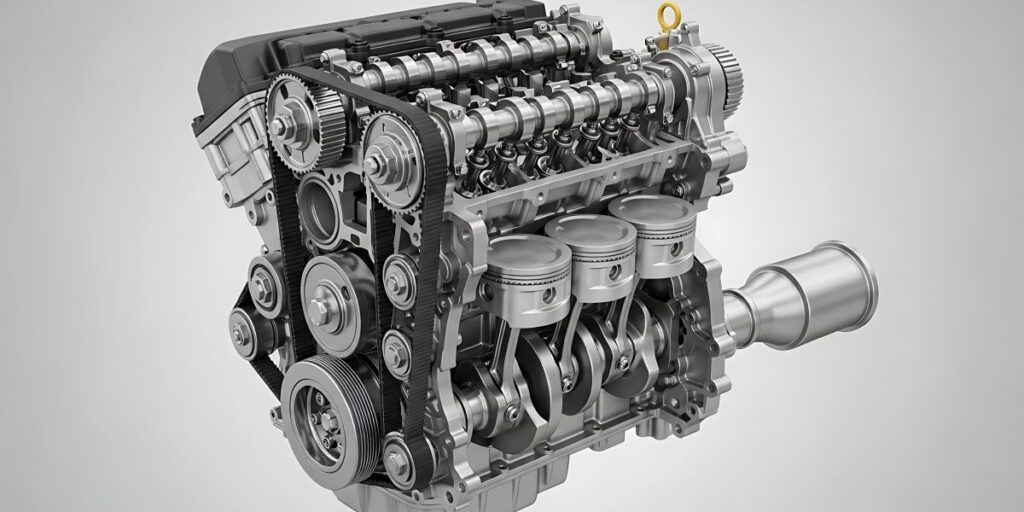
A four stroke engine completes its cycle in four movements of the piston, which is two full turns of the crankshaft. Almost every car, most motorcycles, and the majority of modern outdoor power equipment use this design, because it burns fuel cleanly and runs reliably for a long time. Here’s what happens inside, and why the design became the standard.
The Four Strokes
Each stroke is one travel of the piston, either up or down the cylinder.
- Intake. The piston moves down while the intake valve opens. The downward movement lowers pressure in the cylinder, drawing in air, or an air and fuel mixture depending on the fueling system. The intake valve closes as the piston reaches the bottom.
- Compression. Both valves are closed and the piston travels back up, compressing the mixture into a small space at the top of the cylinder. Compressing it raises its temperature and packs the molecules close together, which makes the burn that follows far more forceful. Compression ratio, the figure you see quoted as something like 10.5:1, describes how much the volume is reduced.
- Power. With the piston near the top, the mixture ignites. A gasoline engine fires the spark plug, while a diesel relies on the heat of compression alone to ignite fuel injected at that moment. The expanding gases drive the piston down, and this is the only stroke producing power. Everything else in the cycle is preparation or cleanup.
- Exhaust. The exhaust valve opens and the piston travels back up, pushing the burned gases out into the exhaust system. The valve closes, the intake valve opens, and the cycle begins again.
How The Parts Work Together
The piston moves up and down inside the cylinder, sealed by piston rings that keep combustion pressure above and oil below. It connects through a connecting rod to the crankshaft, which converts the up and down motion into rotation.
The camshaft opens and closes the valves, driven from the crankshaft by a timing belt or chain at exactly half crankshaft speed, since each valve opens once per two crank revolutions. That timing relationship is why a broken belt is so serious on interference engines: valves and pistons occupy the same space at different moments, and losing the timing puts them there simultaneously.
The valves themselves seal the combustion chamber, and the small clearance in the valve train exists so they seat fully as components expand with heat.
Why Four Strokes Rather Than Two
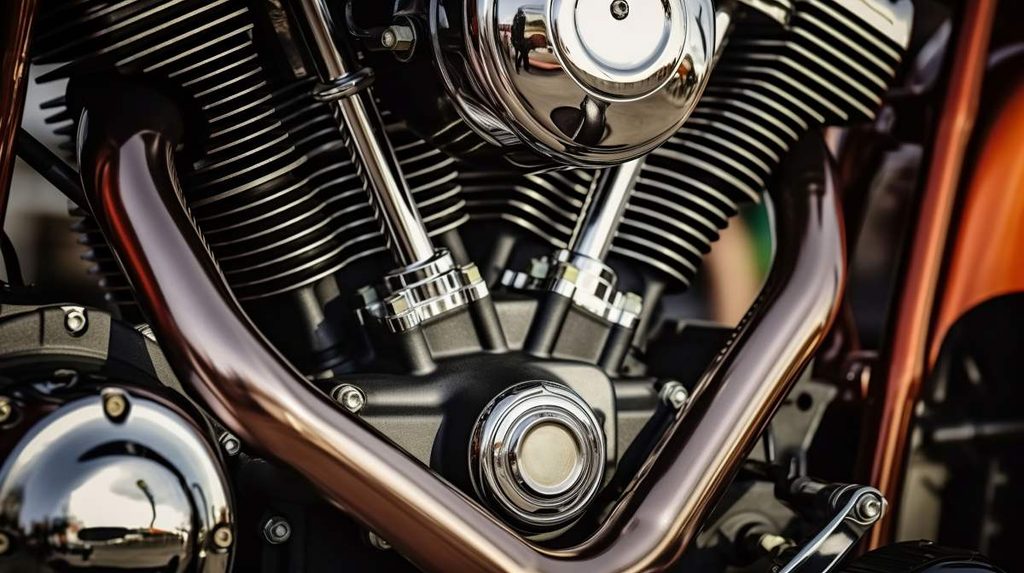
Two stroke engines complete a power cycle every crankshaft revolution, which makes them lighter and more powerful for their size. They are still used in chainsaws, some outboards, and small equipment for exactly that reason.
Four stroke engines separate the intake and exhaust events completely, which produces cleaner combustion, better fuel economy, and far lower emissions. They also keep their oil in a dedicated system rather than mixing it with the fuel, so the engine lasts considerably longer and the exhaust stays clean. Those advantages are why cars, motorcycles, and most modern equipment moved to four stroke designs.
Gasoline And Diesel Differences
Both run the same four strokes with two important differences. A gasoline engine draws in a fuel and air mixture, or injects fuel into the intake or cylinder, and ignites it with a spark plug at a precisely controlled moment. A diesel draws in air alone, compresses it much harder, and injects fuel into air already hot enough to ignite it.
The higher compression ratio is why diesels produce more torque and better fuel economy, and why they need heavier internal components and glow plugs or intake heaters to start in cold weather.
What This Means For Maintenance
Understanding the cycle explains most of the maintenance schedule. Oil changes matter because oil lubricates and cools the parts moving under combustion loads. Air filters matter because the intake stroke pulls in whatever is in front of it. Spark plugs wear because they fire once every two revolutions for the life of the engine. Valve clearances need checking because valves and seats wear into each other. Timing belts have replacement intervals because their failure carries consequences no other belt does.
Compression, spark, and fuel are also the three things any running engine needs, which is why diagnosis of a no-start almost always begins by establishing which of the three is missing.
Go Deeper With The Factory Data
Cycle theory explains how engines work in general, and the figures for your specific engine, meaning compression ratios, valve clearances, timing procedures, torque sequences, and firing orders, come from its own documentation. If you want to ensure that all your paperwork is up to date – and, more importantly – the correct document for your engine, our engine service manuals at emanuals cover automotive, motorcycle, marine, and industrial engines. We’ve got a library of over 5 million titles, with every download yours permanently, and we’re sure to have yours.
FAQs
What are the four strokes in order?
Intake, compression, power, and exhaust. The piston travels down, up, down, and up again, completing the cycle in two full revolutions of the crankshaft.
Which stroke actually produces power?
Only the power stroke, when the ignited mixture expands and drives the piston down. The other three strokes prepare for it or clear up after it, which is why multi-cylinder engines stagger their cycles to deliver smoother output.
What is the difference between a two stroke and a four stroke engine?
A two stroke completes its cycle in one crankshaft revolution and mixes oil with its fuel, making it lighter and more powerful for its size. A four stroke takes two revolutions, keeps oil in a separate system, and delivers better economy, lower emissions, and much longer service life.
How does a diesel engine differ from a gasoline engine?
A diesel compresses air alone to a much higher ratio and ignites fuel by compression heat, while a gasoline engine compresses an air and fuel mixture and ignites it with a spark plug. The difference explains the diesel’s torque, economy, and cold starting requirements.
Why is the timing belt so important?
It keeps the camshaft turning in exact relationship with the crankshaft, so the valves open and close at the right points in the cycle. On interference engines, a broken belt allows pistons and valves to contact each other, which causes major internal damage.