
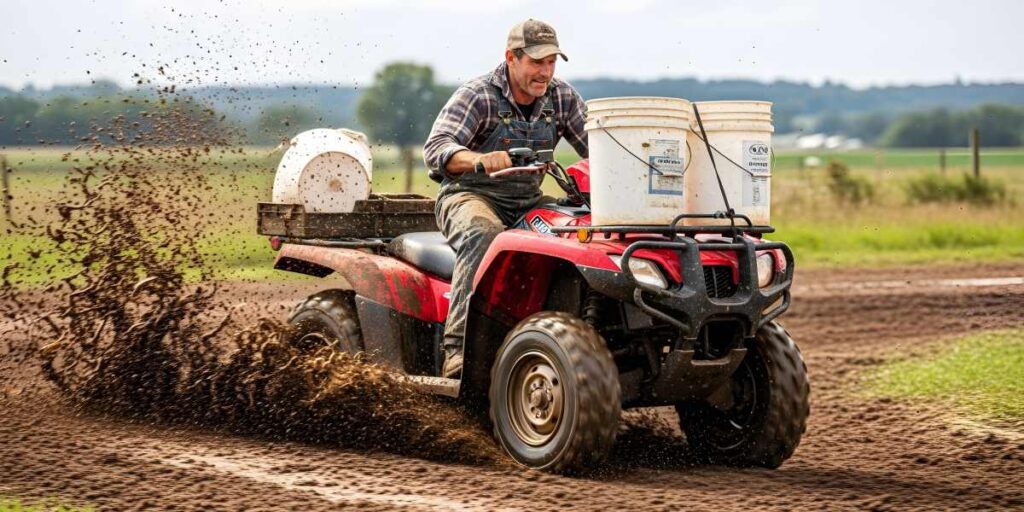
ATVs work in conditions that punish machinery: mud, water, dust, sand, and constant vibration, usually followed by weeks of sitting still. Maintenance intervals reflect that, and most manufacturers structure the schedule around both hours and rides rather than a fixed calendar. A machine used hard in wet conditions needs attention considerably more often than the hour meter suggests.
Here’s the schedule, from the checks before each ride through to the annual work.
Before Every Ride
- Engine oil level, checked on level ground
- Coolant level on liquid-cooled machines
- Tire pressure, which on an ATV is low and matters a great deal to handling and traction
- Brakes, front and rear, tested for firm feel and adequate pad material
- Throttle operation, returning freely to closed
- Steering, checked for free play and unusual noise
- Lights, kill switch, and any warning indicators
- Chain or driveshaft condition, and CV boots for splits
- Air filter, especially if the last ride was dusty
- Fasteners, with a quick look at anything that has come loose
After Every Ride
Wash the machine, particularly after mud or saltwater use, and pay attention to the radiator, the CV boots, the chain, and the brake components. Avoid aiming a pressure washer directly at bearings, seals, or electrical connectors, since forcing water past a seal causes more damage than the mud would have.
Once it’s clean, look it over again while the surfaces are visible, then lubricate the chain if your machine has one and grease anything the manual lists.
The Air Filter Deserves Its Own Section
ATVs ingest more dust than almost any other recreational vehicle, and the air filter is the single most consequential maintenance item on the machine. Check it after every dusty or muddy ride, clean or replace it far more often than the standard interval if you ride in those conditions, and inspect the airbox for water and debris after water crossings.
Foam filters need cleaning in the specified solvent, drying completely, and re-oiling with the correct filter oil. A poorly seated or torn filter passes dust straight into the engine, which is among the fastest ways to wear one out.
Oil And Filter Changes
Change engine oil and the filter on the manufacturer’s interval, which is typically every 50 to 100 hours or annually, and considerably sooner for machines ridden in water, mud, or at low speeds under load. Water crossings are the main reason to shorten the interval, since water past a seal turns oil milky and destroys its ability to protect anything. Check the oil’s appearance at every ride, and if it looks milky or the level has risen, change it and find out where the water is entering.
Drivetrain And Differentials
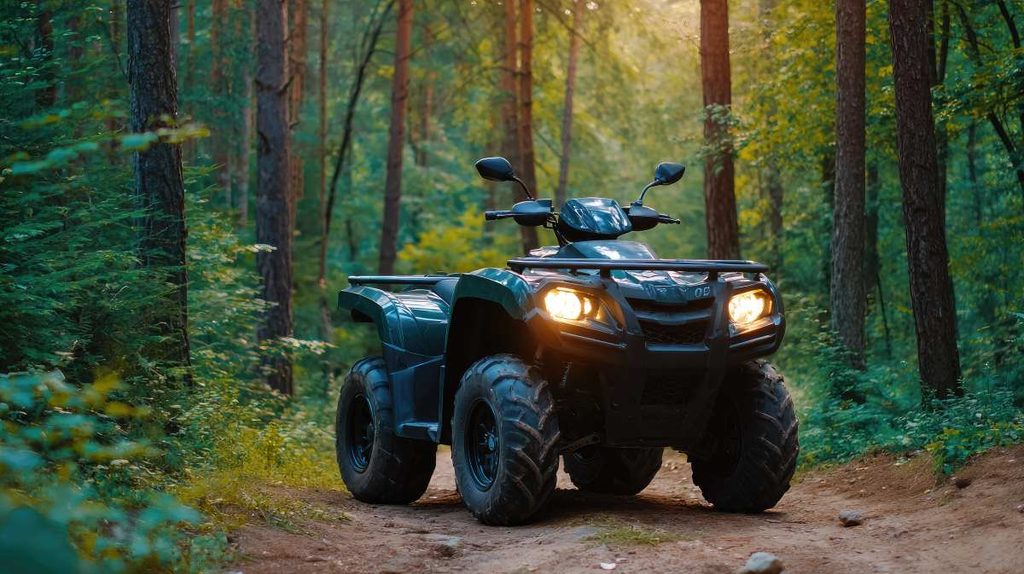
Chain-driven machines need chain tension and lubrication checked constantly, since ATV chains stretch quickly in abrasive conditions. Shaft-driven machines need front and rear differential oil changes on the schedule, plus inspection of the CV boots, because a split boot admits grit that destroys the joint within a few rides.
Check wheel bearings for play by rocking each wheel, since ATV bearings work hard and fail regularly in wet conditions.
Brakes And Suspension
Inspect pad thickness front and rear, check brake fluid level and condition, and replace fluid on the interval given, since brake fluid absorbs moisture and ATVs frequently submerge their brake components. Look at the discs for scoring and the calipers for sticking, particularly after muddy use.
For suspension, check the shocks for leaks, look at the bushings and pivot points for play, and grease the fittings your machine has. Sand and grit accelerate wear on every suspension pivot.
Cooling And Electrical
On liquid-cooled machines, clear mud and debris from the radiator fins after every muddy ride, since a packed radiator overheats an engine quickly at ATV speeds. Check coolant level and replace it on the interval. Test the fan operation.
Batteries on ATVs fail from sitting more than from use. Keep the terminals clean, use a maintainer during storage, and test it before each season rather than discovering the problem at the trailhead.
Storage Between Seasons
For anything longer than a month, add fuel stabilizer and run the engine to circulate it, change the oil so the engine sits with clean oil rather than acidic used oil, put the battery on a maintainer or remove it, set tire pressures, and store the machine covered somewhere dry with something blocking rodent access.
Get The Intervals For Your Model
Capacities, tire pressures, valve clearances, chain tension figures, and torque values differ by make, model, and year, and powersports manufacturers change specifications between model years more often than car makers do. At emanuals, you can get recreational vehicle maintenance guides and full OEM manuals for ATVs, UTVs, and side-by-sides across a library of more than 5 million titles. And what’s great about a PDF is that it works offline – so it suits a machine that lives where signal doesn’t.
FAQs
How often should I change the oil in my ATV?
Most manufacturers specify every 50 to 100 hours or annually, whichever comes first. Shorten that interval considerably if you ride through water, work the machine hard at low speeds, or find any sign of water in the oil.
How often should I clean an ATV air filter?
After every dusty or muddy ride, rather than on a fixed interval. The air filter is the most consequential maintenance item on an ATV, and a clogged or damaged one passes dust straight into the engine.
Can I pressure wash my ATV?
Yes, with care. Keep the nozzle away from bearings, seals, electrical connectors, and the airbox, since high-pressure water forced past a seal causes far more damage than the mud it removes.
What tire pressure should an ATV run?
Whatever the manufacturer specifies, which is typically much lower than a car and often in the range of 3 to 7 psi. ATV tires are sensitive to small changes, so use a low-pressure gauge rather than a standard automotive one.
Why does my ATV oil look milky?
Water has entered the engine, usually through a water crossing, a submerged airbox, or a failed seal. Change the oil promptly and find the entry point, because water in the oil removes its protection and damage follows quickly.