

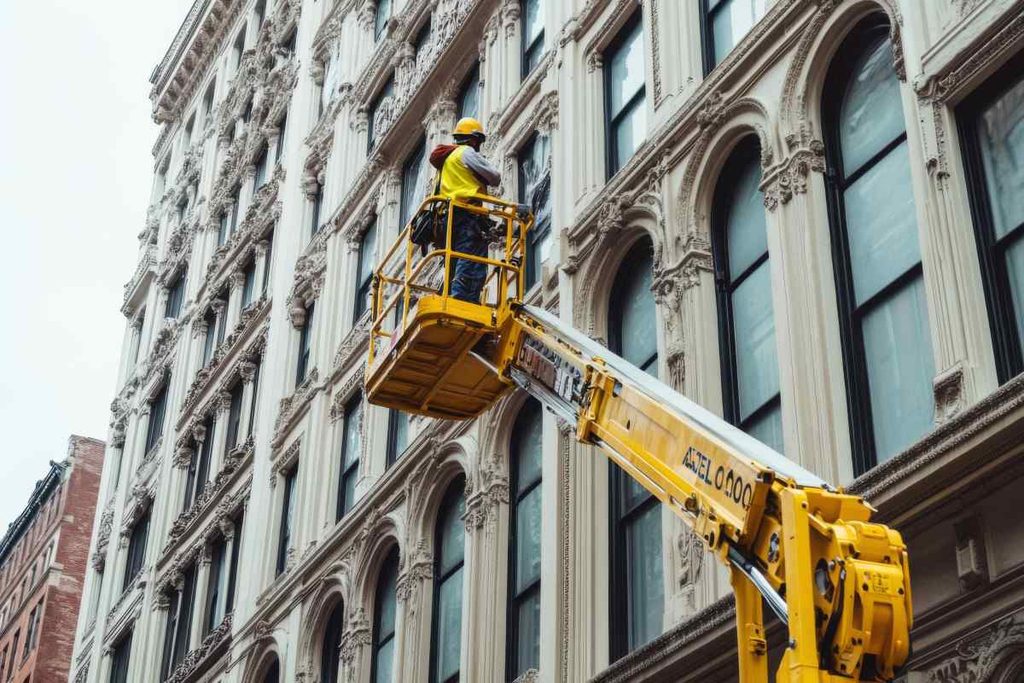
A boom lift puts people in the air, which changes what maintenance means. On most equipment a missed service costs money, and on an aerial work platform it can cost considerably more than that. Maintenance on these machines is also a regulatory matter in the United States, since OSHA and the ANSI A92 standards require inspection and servicing according to the manufacturer’s instructions, with records kept.
The Pre-Use Inspection
Required before every shift, and performed by the operator. It covers:
- Fluid levels: engine oil, coolant, hydraulic oil, and fuel
- Tires and wheels, or tracks where fitted
- Hydraulic hoses, fittings, and cylinders for leaks, chafing, and damage
- Boom, turntable, and chassis structure for cracks, deformation, or damaged welds
- Platform, guardrails, gate, and anchor points
- Placards, decals, and the load capacity chart, all legible
- Emergency lowering system, tested
- All controls at both the platform and ground stations, including the emergency stop
- Tilt alarm, motion alarms, horn, and lights
Anything found defective takes the machine out of service until it’s corrected. That’s not a suggestion in this category of equipment.
Frequent And Annual Inspections
The ANSI standards require a frequent inspection at three months or 150 hours of use, whichever comes first, and also after the machine has been idle for more than three months or has changed ownership. The annual inspection is due within 13 months of the previous one, per ANSI A92, and is more thorough, covering structural condition, hydraulic system performance, and the safety systems in detail. Both are documented, and the records need keeping.
Neither inspection replaces the manufacturer’s service schedule, which runs on its own intervals for fluids, filters, and component servicing.
Hydraulic System Care
The hydraulic system does everything the machine does, and it deserves proportionate attention. Check oil level and condition regularly, change filters on the manufacturer’s schedule, and treat any change in cylinder drift, cycle speed, or noise as a fault to investigate rather than a characteristic to live with. Inspect hoses at every routing point where they flex or pass close to structure, since chafing is the most common cause of hydraulic failure on booms.
Cleanliness matters more than on most equipment. Keep the reservoir sealed, wipe fittings before disconnecting, and cap open lines during any repair.
Structural And Wear Items
Inspect the boom sections, wear pads, pins, and bushings on the manufacturer’s interval, measuring wear against the published limits rather than judging by appearance. Wear pads in particular control how the boom sections move against each other, and worn pads produce play that stresses the structure.
Check the turntable bearing bolts for correct torque at the specified interval, since bearing bolt torque is a critical item on any slewing machine. Look for cracks around welds, mounting points, and anywhere the structure changes section.
Battery And Electrical
Electric and hybrid booms depend entirely on their battery packs. Keep terminals clean, maintain water levels on flooded lead-acid packs, charge on the recommended cycle rather than opportunistically, and avoid deep discharge. On all machines, check wiring harnesses for chafing where they pass through the boom and turntable, since these harnesses flex constantly and eventually wear through at contact points.
Keep The Machine Clean
Wash the machine down regularly, particularly around the turntable, the boom pivots, and the engine compartment. Debris hides cracks and leaks, holds moisture against steel, and accumulates where it causes overheating. A clean machine is also inspected more honestly, since a technician can see what they’re looking at.
Document Everything
Regulations require records for inspections and repairs, and beyond compliance the log tells you what’s due and reveals patterns across a fleet. Record who performed each inspection, what was found, what was corrected, and the hour reading at the time. Keep the manual, the inspection records, and the operator’s manual with the machine or accessible to whoever works on it.
Train Operators Properly
Operators are the inspection layer that runs every day, and trained operators catch faults early and use the machine within its limits. Familiarization on the specific model matters, since controls, capacities, and emergency procedures vary between manufacturers and models more than people expect.
Work From The Manufacturer’s Data
Wear limits, torque values, hydraulic pressures, inspection intervals, and emergency procedures are model-specific, and on aerial equipment the manufacturer’s instructions carry regulatory weight. At emanuals, you get industrial equipment service manuals across a library of more than 5 million titles, downloadable as PDFs that work offline wherever the machine happens to be. Become a member today and keep the right documentation on hand, 24/7.
FAQs
How often does a boom lift need inspection?
Before every shift by the operator, at three months or 150 hours for the frequent inspection, and every twelve months for the annual inspection. A machine idle for more than three months or one that changes ownership also requires a frequent inspection before use.
Who can perform boom lift inspections?
Pre-use inspections are performed by trained operators. Frequent and annual inspections must be carried out by a qualified person as defined by the standards, using the manufacturer’s procedures and criteria.
What are the most common boom lift maintenance issues?
Hydraulic leaks from chafed hoses, worn boom wear pads, battery problems on electric machines, and electrical faults from harnesses worn through at flex points. All four are caught early by consistent inspection.
How long do boom lift batteries last?
Typically three to five years on flooded lead-acid packs with correct maintenance, meaning clean terminals, maintained water levels, proper charging cycles, and avoiding deep discharge. Neglecting any of those shortens life considerably.
Do I need to keep boom lift maintenance records?
Yes. The standards require documented inspections and repairs, and the records need to be available for the machine. Beyond compliance, they show what’s due next and reveal recurring faults across a fleet.