
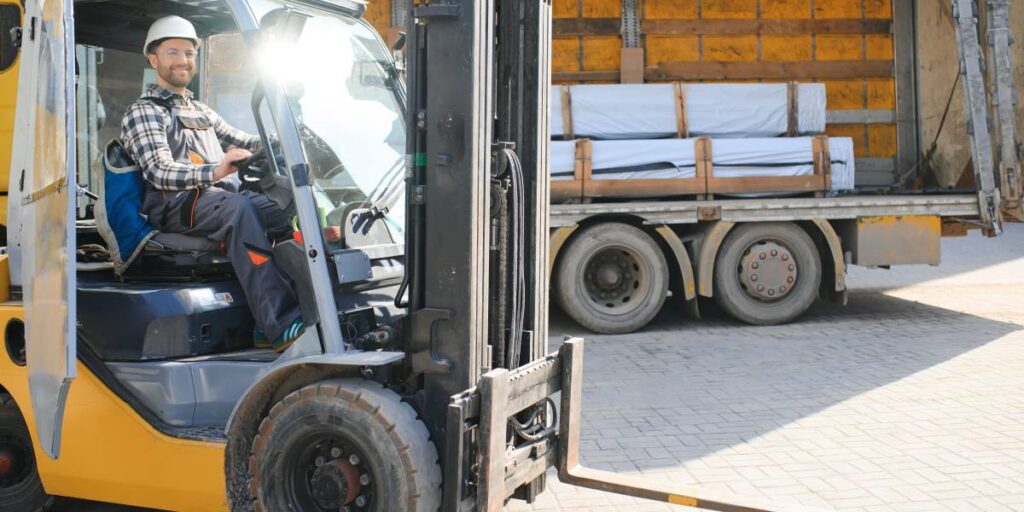
Forklifts sit in a category of their own because maintenance on them is both an operational matter and a legal one. OSHA requires that forklifts are examined before each shift, or after each use where a truck runs around the clock, and that any truck found unsafe is removed from service until it’s repaired. That requirement shapes the whole maintenance routine.
The practical upside is that warehouses running proper daily checks see far fewer breakdowns, because forklift faults develop gradually and show themselves early to anyone looking.
The Daily Pre-Shift Inspection
Performed by the operator, documented, and required before the truck is used.
With the engine off:
- Fluid levels: engine oil, coolant, hydraulic fluid, and on internal combustion trucks, fuel
- Leaks under the truck and around the mast cylinders and hoses
- Tires for wear, cuts, and correct pressure on pneumatic types
- Forks for cracks, bends, and wear at the heel, plus the locking pins
- Mast chains for tension, wear, and correct adjustment, and the chain anchors
- Overhead guard and load backrest for damage
- Data plate legible, and capacity information intact
- Battery condition and connections on electric trucks, including the charge level and cable insulation
With the engine running:
- Brakes, including the parking brake
- Steering across its full range
- Hydraulic controls: lift, lower, tilt, and any attachment functions
- Horn, lights, and the reversing alarm
- Gauges and warning lights
- Seat belt and the operator presence system
Anything failing an inspection takes the truck out of service. Documenting the inspection matters as much as performing it, since the records are what an inspector asks for.
Every 250 Hours
The standard service interval for most trucks: engine oil and filter on internal combustion units, fuel filter, air filter check, and a detailed inspection of the mast, chains, and hydraulic components.
Check mast chain stretch against the manufacturer’s wear limit. Chains stretch under load over time, and a chain past its limit is a safety item rather than a maintenance one. Lubricate the chains on the interval given, since dry chains wear far faster.
Every 500 To 1,000 Hours
Hydraulic filter replacement, transmission service on internal combustion trucks, brake inspection and adjustment, and cooling system checks. Inspect the mast rollers and wear strips, and check the fork carriage for play.
On electric trucks, this is the point for a detailed look at the motor, contactors, and controller, plus a full battery inspection.
Annually
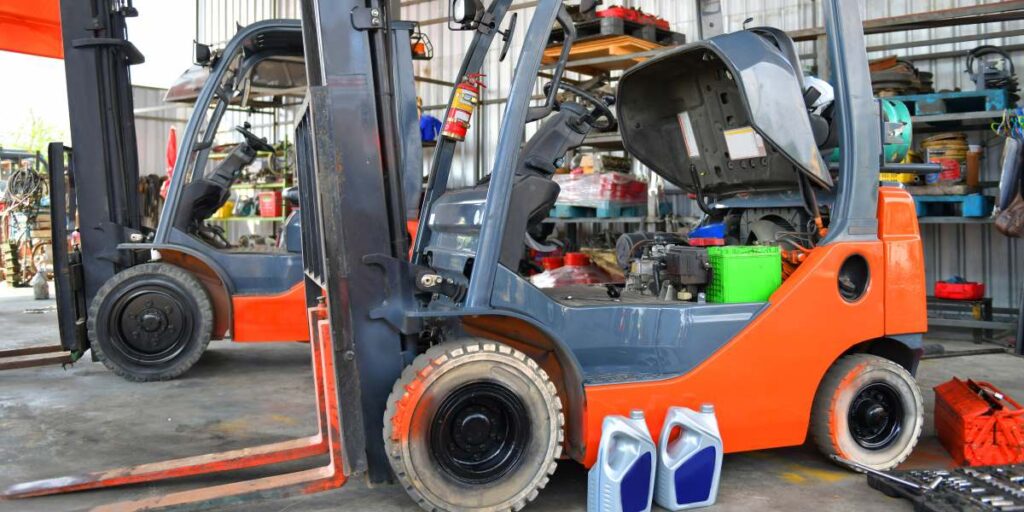
A comprehensive service covering the engine or drive system, the full hydraulic system including pressure testing, the complete brake system, steering components, and a structural inspection of the mast, carriage, and overhead guard. Forks should be inspected annually to the relevant standard, checking for cracks, wear at the heel exceeding 10 percent of original thickness, blade and shank angle, and fork tip height difference.
Battery Care On Electric Trucks
Electric forklifts live or die by battery management, and the battery is one of the most expensive components on the truck.
- Charge on a full cycle. Opportunity charging during breaks shortens life on conventional lead-acid batteries unless the battery and charger are designed for it.
- Water after charging, not before, and only to the correct level, using distilled water. Watering before a charge causes overflow as the electrolyte expands.
- Keep terminals and the battery top clean, since electrolyte and dirt on the surface create a discharge path between terminals.
- Avoid deep discharge. Running a battery below about 20 percent charge repeatedly reduces its service life considerably.
- Equalise on the manufacturer’s schedule to balance the cells.
- Lithium batteries change most of these rules, so follow the manufacturer’s guidance for the chemistry you have.
LPG And Diesel Trucks
LPG trucks need the tank, hoses, and connections checked for leaks at every cylinder change, and the vaporiser serviced on schedule. Diesel trucks in enclosed warehouses need their exhaust and after-treatment systems maintained, since emissions in an indoor space are a health matter as well as a mechanical one.
Both need ventilation considered as part of the operation, and carbon monoxide monitoring is worth having where internal combustion trucks run indoors.
Tires Deserve Attention
Forklift tires carry enormous loads for their size. Cushion tires need replacing when wear reaches the manufacturer’s line, and pneumatic tires need correct pressure and regular inspection for cuts and chunking. Worn tires affect stability directly, which on a machine lifting loads to height is a safety issue and not only a running cost.
Records And Scheduling
Keep a file per truck with hours, every inspection, every repair, and every part fitted. Track hours accurately, since forklift service intervals are hour-based and trucks in the same fleet accumulate hours at very different rates. The records also demonstrate compliance, which is the part that matters when someone asks.
Work From The Manufacturer’s Manual
Service intervals, chain wear limits, hydraulic pressures, fork inspection criteria, and battery specifications vary by make and model, and OSHA’s requirement is that maintenance follows the manufacturer’s instructions. At emanuals, we keep it simple: you get business equipment repair manuals covering forklifts and warehouse equipment from every major manufacturer, drawn from a library of over 5 million OEM titles with downloads you keep.
FAQs
How often must a forklift be inspected?
Before every shift, or after each use where a truck operates around the clock. This is an OSHA requirement, the inspection is performed by the operator, and any truck found unsafe must be removed from service until repaired.
Who can perform forklift maintenance?
Repairs and servicing must be carried out by qualified and trained personnel following the manufacturer’s instructions. Daily pre-shift inspections are performed by trained operators as part of normal operation.
How long does a forklift battery last?
A well-maintained lead-acid battery typically lasts around five years or 1,500 charge cycles. Life depends heavily on charging practice, watering, keeping the terminals clean, and avoiding deep discharge.
When should forklift forks be replaced?
When wear at the heel exceeds 10 percent of the original thickness, or when cracks, bending, or damage to the tips or locking mechanism are found. Forks should be inspected at least annually and removed from service immediately if any of those are present.
What are the most common forklift maintenance problems?
Battery neglect on electric trucks, worn or stretched mast chains, hydraulic leaks, and tire wear. All four are caught early by consistent daily inspections, which is why the pre-shift check earns its place.